Climate-controlled storage for wood, leather, art and paper
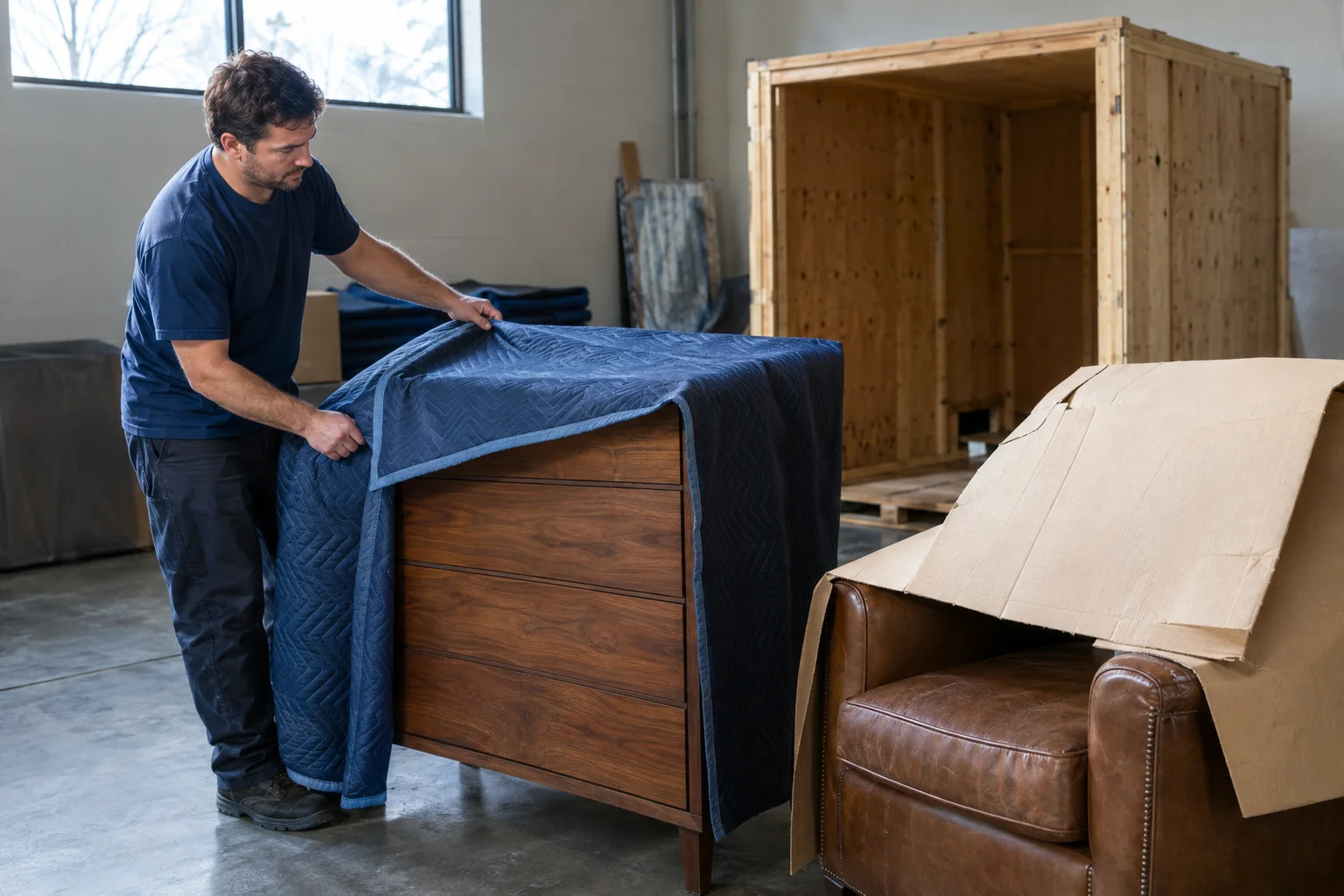
Humidity swings crack veneer, feed mould on leather and make paper brittle. Amenity keeps crated household goods in a climate-controlled space at its Plainfield warehouse.
- Climate-controlled space
- Furniture padded and crated
- Staff-only warehouse
- Free in-home estimate
Do you need climate-controlled storage when moving from Yorkville, and what does it protect?
Climate-controlled storage limits the temperature and humidity swings that crack wood and veneer, grow mould on leather and textiles, and make paper brittle. Through Yorkville Movers, Amenity Moving & Storage keeps padded, crated furniture in a climate-controlled space at its Plainfield warehouse. It matters most for antiques, solid wood, leather, rugs, art, documents and pianos stored across a change of season.
- Environment
- Climate-controlled warehouse space in Plainfield, IL
- Temperature and humidity set points
- Not published; ask at your estimate
- Most sensitive items
- Wood and veneer, leather, rugs and textiles, paper, paintings, pianos
- How furniture is protected
- Pads and cardboard, then a sealed wooden crate
- Piano storage
- Gated, climate-controlled, monitored; piano raised while stored
Free moving estimate
Tell us where and when. Amenity’s office replies directly — no call centers.
Goes straight to Amenity Moving & Storage’s office. Never sold or shared with other movers.
On this page
What climate control protects your belongings from
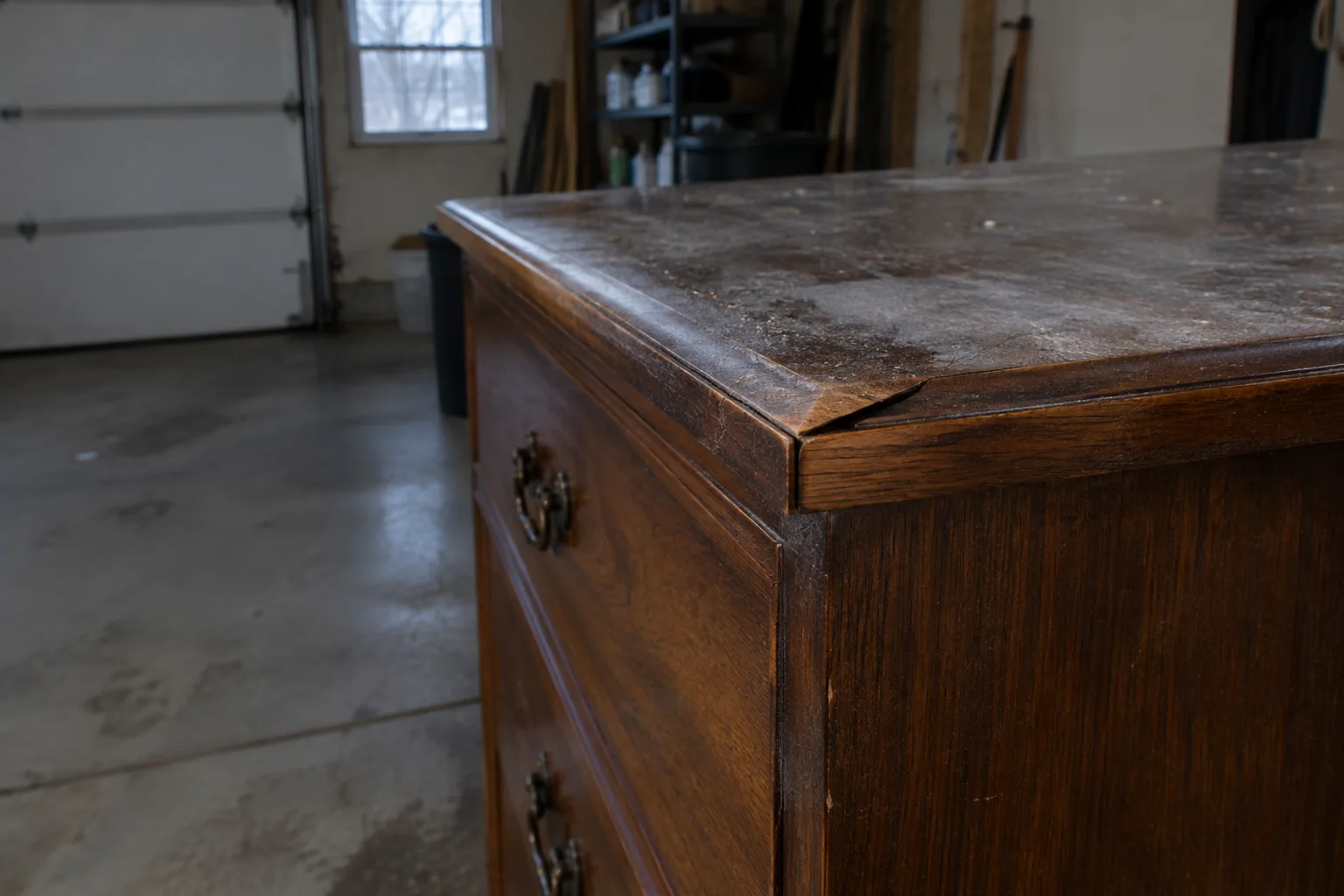
Climate control protects household goods from two things: damp air, which feeds mould, and fast swings in humidity, which make wood and paint swell and shrink until they crack. The Canadian Conservation Institute reports that mould can appear in about 100 days at 70% relative humidity and in only about 2 days at 90% or higher, and that wood assemblies exposed to fluctuations may crack, split, delaminate or distort permanently (CCI: incorrect relative humidity).
Dry air does damage too. The same CCI guidance notes that winter heating without humidification can drive indoor humidity very low and raise the risk of furniture cracking. The Northeast Document Conservation Center adds that warm temperatures with low humidity can make wood- and paper-based materials more brittle, and that wide fluctuations in temperature and humidity damage collections (NEDCC preservation leaflet 2.1).
A stay that runs from a Yorkville summer into winter puts your furniture through both conditions, which is why the season matters as much as the length of storage. The moving and storage overview explains how goods get to the warehouse in the first place.
Materials that need climate control most
The materials most at risk are organic ones that take on and give off moisture: wood, leather, textiles, paper, paint layers and the wooden parts of pianos. Most metal and plastic household items are less sensitive, which is why the decision usually turns on what the furniture is made of rather than how much of it there is.
| Material | What can go wrong | Guidance from |
|---|---|---|
| Solid wood and veneered furniture | Swells and shrinks with humidity; panels, joints and veneer over corner joints can crack, split or lift | Canadian Conservation Institute |
| Leather sofas, chairs and luggage | Leather is highly prone to mould in damp air and can weaken from pollutants | CCI; Northeast Document Conservation Center |
| Rugs, quilts, linens and upholstery | Textiles absorb and release water easily and can grow mould when damp | NEDCC; CCI |
| Books, documents and works on paper | Brittleness in warm, dry air; distortion and mould in damp air | Library of Congress; NEDCC |
| Paintings on canvas | Paint layers can crack, delaminate or flake; drops in humidity are riskier than rises | CCI |
| Pianos | The soundboard swells and shrinks, shifting pitch; extreme swings can crack wood and break glue joints | Piano Technicians Guild |
Antiques often combine several of these at once, such as a veneered chest with original paper labels or a leather-topped desk, so they deserve the most attention. Pianos have their own arrangement, covered on the piano storage page; the Piano Technicians Guild notes that extreme humidity swings can eventually crack wood and make glue joints fail (PTG: humidity control).
Why a garage, attic or basement falls short
Spare space at home is usually unconditioned or only partly conditioned, which is why conservators steer valuables away from it. For works on paper, the Library of Congress recommends a cool, clean, stable environment at about 35% relative humidity, and tells owners to avoid attics, basements and other locations with high risk of leaks and environmental extremes (LOC: works on paper).
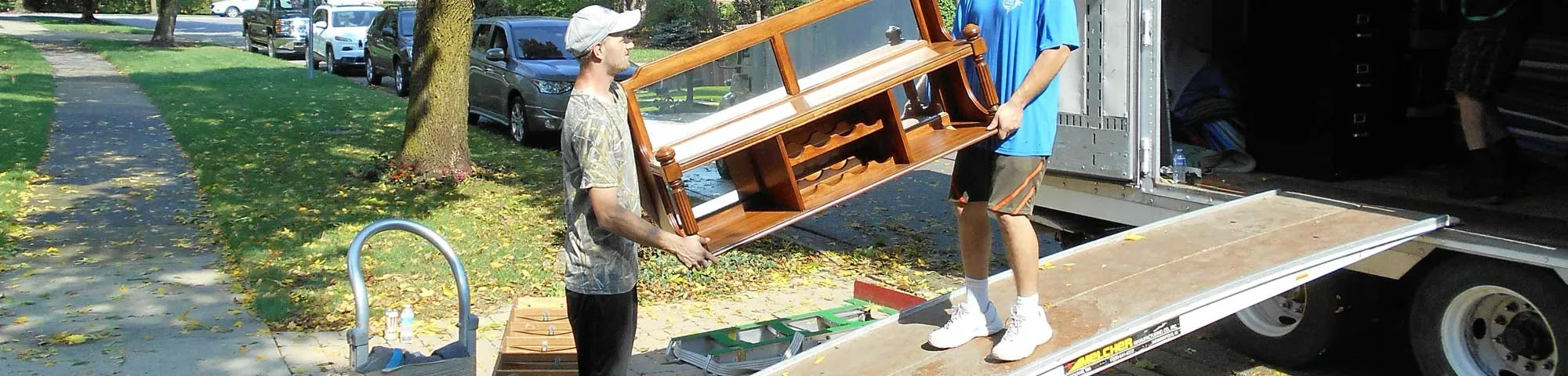
- Garage. Outdoor air comes in every time the door goes up, so the space follows the weather.
- Attic. Heat collects under the roof in summer, and the space is rarely humidified in winter.
- Basement. The Library of Congress flags basements for leak risk, and a damp corner is where mould starts first.
None of this means every Yorkville basement is damp. It means an unmonitored space is a gamble for anything made of wood, leather, fabric or paper over a long stay. A cedar chest, a grandparent’s rocker or a box of wedding photos parked in the garage for a year is the classic case, and it is easier to plan around than to repair.
Deciding whether climate control is worth it for your items
Climate control is worth it when the items are sensitive, the stay crosses a change of season, or the pieces couldn’t be replaced. If two or more of these describe your load, plan for it:
- The storage period runs through at least one change of season
- You’re storing antiques or solid-wood and veneered furniture
- Leather, rugs, quilts or upholstered pieces are part of the load
- Cartons hold photographs, documents, books or artwork
- A piano or other wooden instrument is going in
- Some pieces carry family value you couldn’t buy back
For a stay of a few days with mostly metal and plastic items, packing quality matters more than the air around the boxes. That’s the usual case for short-term storage between Yorkville closings, while months-long stays are covered under long-term storage.
Planning a move in Yorkville?
Book a free, no-obligation estimate with Amenity’s office. One household per truck, licensed since 1986.
How climate control works with Amenity's crate storage
At Amenity’s Plainfield warehouse, about 10 miles east of Yorkville, climate control is one layer on top of the crating, not a substitute for it. Furniture is wrapped in pads and cardboard and sealed in 8′ x 7.5′ x 5′ wooden crates, sofas go on sofa racks, and goods are kept in a climate-controlled space that only Amenity personnel can enter. The wooden crate storage page explains the crating in detail.
Amenity’s storage page describes a climate-controlled space but doesn’t list temperature or humidity set points. If an item needs a specific range, such as a painting a conservator has advised on, ask at your estimate and get the answer in writing.
Pianos are handled separately: Amenity describes a fully gated, climate-controlled facility with security-system monitoring, and the piano is raised while stored. The same storage serves households from nearby towns such as North Aurora and Shorewood, since every load ends up in the same Plainfield warehouse.
Preparing sensitive items before pickup
Preparation starts at the estimate, because the estimator needs to see sensitive pieces before moving day, not discover them on it.
- Point out sensitive piecesShow the estimator antiques, art, leather and instruments during the walk-through so they’re planned for.
- Crate the fragile onesAmenity’s packers use premium materials, including custom crating for fragile and valuable possessions; see fragile items and custom crating.
- Dry anything dampRugs, cushions and anything that sat in a damp basement should be completely dry before it’s wrapped.
- Keep paper togetherPack documents and photographs in sturdy cartons, away from liquids and cleaning supplies, and label them clearly.
- Record conditionPhotograph veneer edges, leather seams and painting surfaces so any later change is easy to spot.
- Plan a winter deliveryIf delivery lands in January, read moving in a northern Illinois winter. Amenity lays floor runners and can change dates when weather turns, subject to availability.
Some things don’t belong in storage at all, whatever the climate; the guide to what movers won’t move or pack covers them.

More moving & storage services
 Short-Term StorageStorage between closings, leases and builder delaysLearn more →
 Long-Term StorageMonths to years of warehouse storage with a full inventoryLearn more →
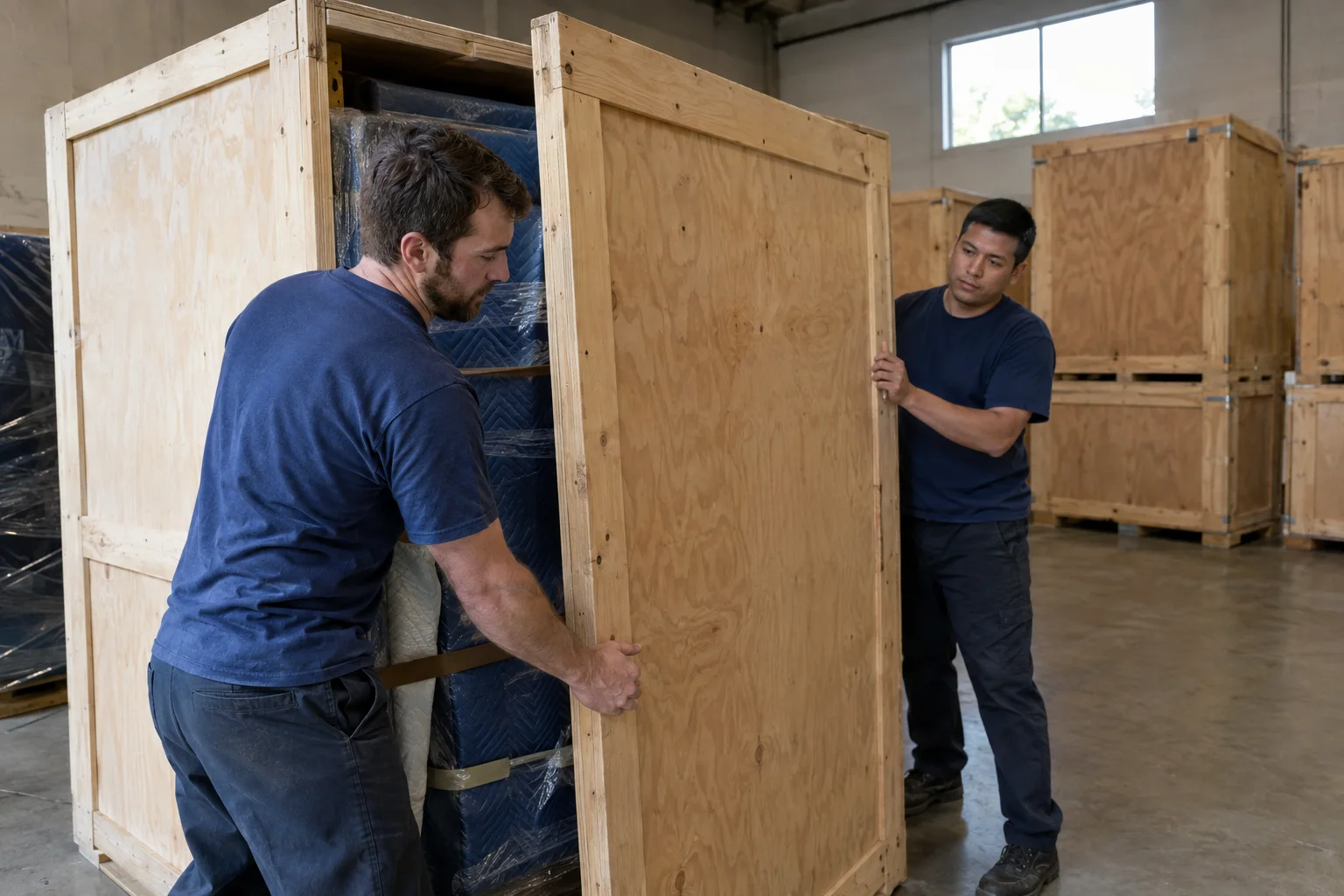 Wooden Crate (Vault) StorageFurniture padded and sealed in 8' x 7.5' x 5' wooden cratesLearn more →
Back to Moving & Storage in Yorkville · all moving services
Available across the Yorkville area
Frequently asked questions
Is climate-controlled storage worth it?
It is worth it for wood and veneered furniture, leather, rugs, artwork, documents and pianos, especially when storage runs across a change of season. Conservation bodies such as the Canadian Conservation Institute link humidity swings to cracking wood and damp air to mould. For a few days of storage with mostly metal or plastic items, packing quality matters more than the climate.
What should never be stored without climate control?
Antiques, solid-wood and veneered furniture, leather, rugs and quilts, paintings, photographs, important documents and pianos are the items to keep out of unconditioned space. Each is made of organic material that takes on and gives off moisture, so swings in humidity cause cracking, warping, brittleness or mould over time.
What temperature and humidity does Amenity keep its warehouse at?
Amenity describes a climate-controlled storage space but doesn’t publish specific set points. If an item needs a particular range, ask at your free in-home estimate and get the answer in writing. For reference, the Library of Congress suggests about 35% relative humidity for works on paper, and Steinway recommends 40% to 60% for pianos.
Can mould grow on furniture in storage?
It can if goods go in damp or sit in damp air. The Canadian Conservation Institute says mould can appear in about 100 days at 70% relative humidity and in about 2 days at 90% or higher. Make sure rugs, cushions and linens are fully dry before pickup, and keep leather and textiles out of unconditioned garages and basements.
Is a climate-controlled self-storage unit the same as warehouse storage?
No. In a self-storage unit you load, stack and lock the space yourself, and the climate depends on the facility. With Amenity, the crew pads and crates your furniture, logs every item in an inventory database and keeps it in a staff-only, climate-controlled warehouse. You don’t get a key, so ask at your estimate how retrieving items is arranged.
How should I store photos and documents during a move?
Keep irreplaceable originals with you if you can. Otherwise pack them in sturdy, clearly labeled cartons away from liquids, and store them somewhere cool, dry and stable. The Library of Congress advises avoiding attics and basements for paper because of leak risk and extremes. Scanning key documents before the move gives you a backup.
Does winter storage damage wood furniture?
Cold itself is less of a problem than dryness and sudden change. The Canadian Conservation Institute notes that winter heating without humidification can drop indoor humidity very low and raise the risk of furniture cracking. Climate-controlled storage avoids the swings of a garage, and in winter Amenity lays floor runners at delivery and can move dates when weather turns, subject to availability.
Sources
- Incorrect relative humidity — Canadian Conservation Institute, Government of Canada
- 2.1 Temperature, Relative Humidity, Light, and Air Quality: Basic Guidelines for Preservation — Northeast Document Conservation Center
- Care, Handling and Storage of Works on Paper – Collections Care — Library of Congress
- Humidity Control – Teacher Resources — Piano Technicians Guild
- Storage Facilities for Chicagoland – Amenity Moving & Storage — Amenity Moving & Storage
Who handles your move
Yorkville Movers is operated by Amenity Moving & Storage Inc., 10028 Mandel St, Plainfield, IL 60585 — a family-run Illinois mover since 1986 whose crews dispatch to Yorkville and Kendall County from its Plainfield warehouse. Illinois household goods license ILCC 73744 MC-C. Interstate moves are transported under the authority of Wheaton Van Lines, Inc. (USDOT 70719, MC-87113), for which Amenity is an authorized agent. See licenses & disclosures.
Last reviewed November 11, 2026 by the Yorkville Movers team against Amenity Moving & Storage’s published service details and the public sources listed above.
Planning a move in Yorkville?
Book a free, no-obligation estimate with Amenity’s office. One household per truck, licensed since 1986.