Moving Valuation Coverage and Protection Plans
How a mover's liability for your belongings is set on interstate and Illinois moves, and how Amenity's Limited Liability, Full Value and Replacement Value plans compare.
- Wheaton World Wide agent
- Licensed ILCC 73744 MC-C
- BBB accredited since 2017
- Free in-home estimates
What is moving valuation coverage, and which level should I choose?
Moving valuation coverage is the limit of a mover’s liability if your belongings are lost or damaged; it is not insurance. On interstate moves from Yorkville, federal rules make Full Value Protection the default; free released value, 60 cents per pound per article, requires a written waiver. Illinois moves default to 60 cents per pound per article unless you declare and pay for more.
- Federal default (interstate)
- Full Value Protection: repair, replace or pay the cost
- Federal free option
- Released value, 60 cents per pound per article
- Illinois default
- 60 cents per pound per article, or a paid lump-sum value
- Amenity's plan names
- Limited Liability, Full Value, Replacement Value
- High-value items
- List anything worth over 100 dollars per pound
- Claim windows
- 9 months interstate; 90 days within Illinois
Free moving estimate
Tell us where and when. Amenity’s office replies directly — no call centers.
Goes straight to Amenity Moving & Storage’s office. Never sold or shared with other movers.
On this page
Valuation is a liability limit, not insurance
Valuation is the most a mover is legally liable for if your goods are lost or damaged in its care, and the ICC’s consumer guide stresses that a carrier’s liability and insurance are not the same thing.
Federal rules require every interstate mover to accept liability for the goods it carries and to disclose its limits clearly (49 CFR 375.201). A mover may also sell separate third-party insurance. If it does, it must hand you a plain-English policy or other written proof at the time of purchase, or it becomes fully liable for the claim itself (375.303), and disputes with that insurer fall outside FMCSA’s rules. Illinois adds that a mover may not advertise insurance as covering all risks unless it truly does (1457.160).
Amenity suggests one more call before you choose: ask your homeowners or renters insurer whether your existing policy covers belongings during a long-distance move, and on what terms.
The two federal options on an interstate move
Every interstate estimate and bill of lading must present two levels: Full Value Protection, which applies unless you waive it in writing, and released value at 60 cents per pound per article, which costs nothing extra (Appendix A to Part 375).
| Full Value Protection | Released value (written waiver) | |
|---|---|---|
| When it applies | Automatically, unless you sign a waiver | Only if you waive Full Value Protection in writing |
| What the mover owes | Repairs the item, replaces it with one of like kind and quality, or pays the cost of either | Up to 60 cents per pound for each lost or damaged article |
| Cost to you | Added to the move; priced on a declared value of at least 6 dollars per pound times shipment weight; deductibles may be offered | No extra charge |
| High-value articles | Items worth more than 100 dollars per pound must be listed, or liability for them may be limited | Still capped at 60 cents per pound |
| The booklet’s example: a 10-pound stereo component worth 1,000 dollars | Repaired, replaced or paid for, subject to the tariff | No more than 6 dollars |
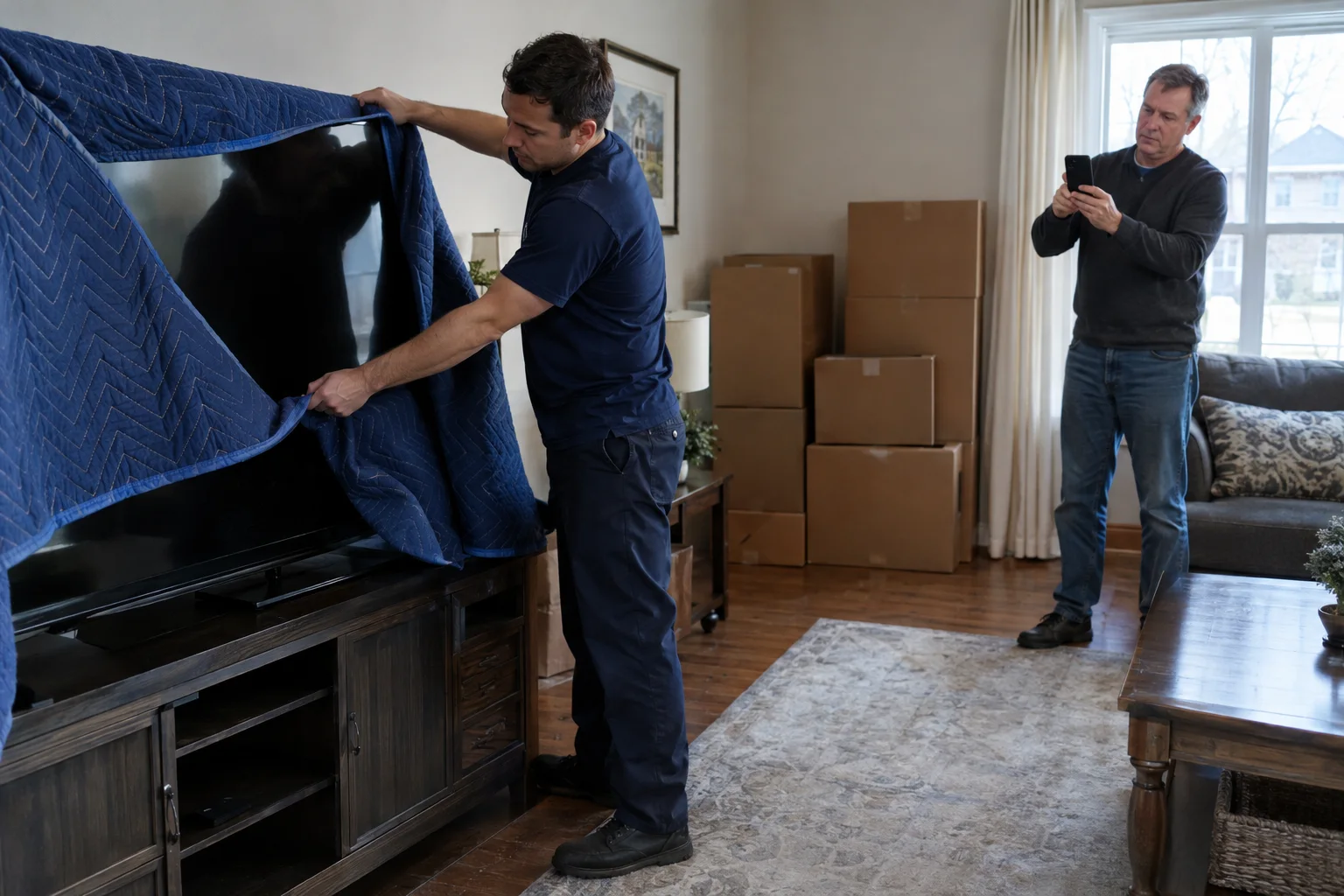
The federal booklet defines an article of extraordinary value as any item worth more than 100 dollars per pound and gives examples: jewelry, silverware, china, furs, antiques, oriental rugs and computer software. List them on the shipping documents, and you are entitled to recover up to their declared value, never more than the declared value of the whole shipment. Leave them off, and the mover may limit its liability for them.

How Amenity's three plan names line up
As a Wheaton World Wide Moving agent, Amenity offers three protection plans on long-distance moves, and its own long-distance page describes them as Limited Liability, based on weight per article; Full Value, based on the depreciated value of goods; and Replacement Value, based on full replacement or repair cost.
| Amenity plan | How Amenity describes it | Closest federal term | What to confirm at the estimate |
|---|---|---|---|
| Limited Liability | Based on weight per article | Released value, 60 cents per pound per article | That you are signing a waiver of Full Value Protection |
| Full Value | Based on the depreciated value of goods | No exact match; federal Full Value Protection is defined as repair or replacement with like kind and quality | The declared value, the deductible and how depreciation is figured |
| Replacement Value | Based on full replacement or repair cost | Full Value Protection | The declared value, deductible options and the charge in Wheaton’s tariff |
Names vary across the industry, so the paperwork is what counts. On an interstate move the valuation statement on your estimate and bill of lading must set out the federal choice between Full Value Protection and the released-value waiver, and if you waive it, the charge for any other optional level must appear on the bill of lading (375.505). Read the plan name, declared value, deductible and charge before you sign. The long-distance moving page shows where this choice falls in the overall process.
Illinois moves start at 60 cents a pound
On a move that stays in Illinois, the mover’s liability is the higher of two figures: 60 cents per pound per article, or a lump-sum value you declare in writing (92 Ill. Adm. Code 1457.150).
You choose by initialing or signing next to an option on the bill of lading or an attachment. A lump-sum declaration takes effect only if you pay its valuation charge; if you don’t, the law treats you as having chosen 60 cents per pound per article. That is the reverse of the federal default, so a family moving from Yorkville to Peoria starts with less protection than one moving to Indianapolis unless it asks for more. The ICC’s short version: the lowest rate offers the least protection. Our page on long moves within Illinois covers the rest of the state’s rules.
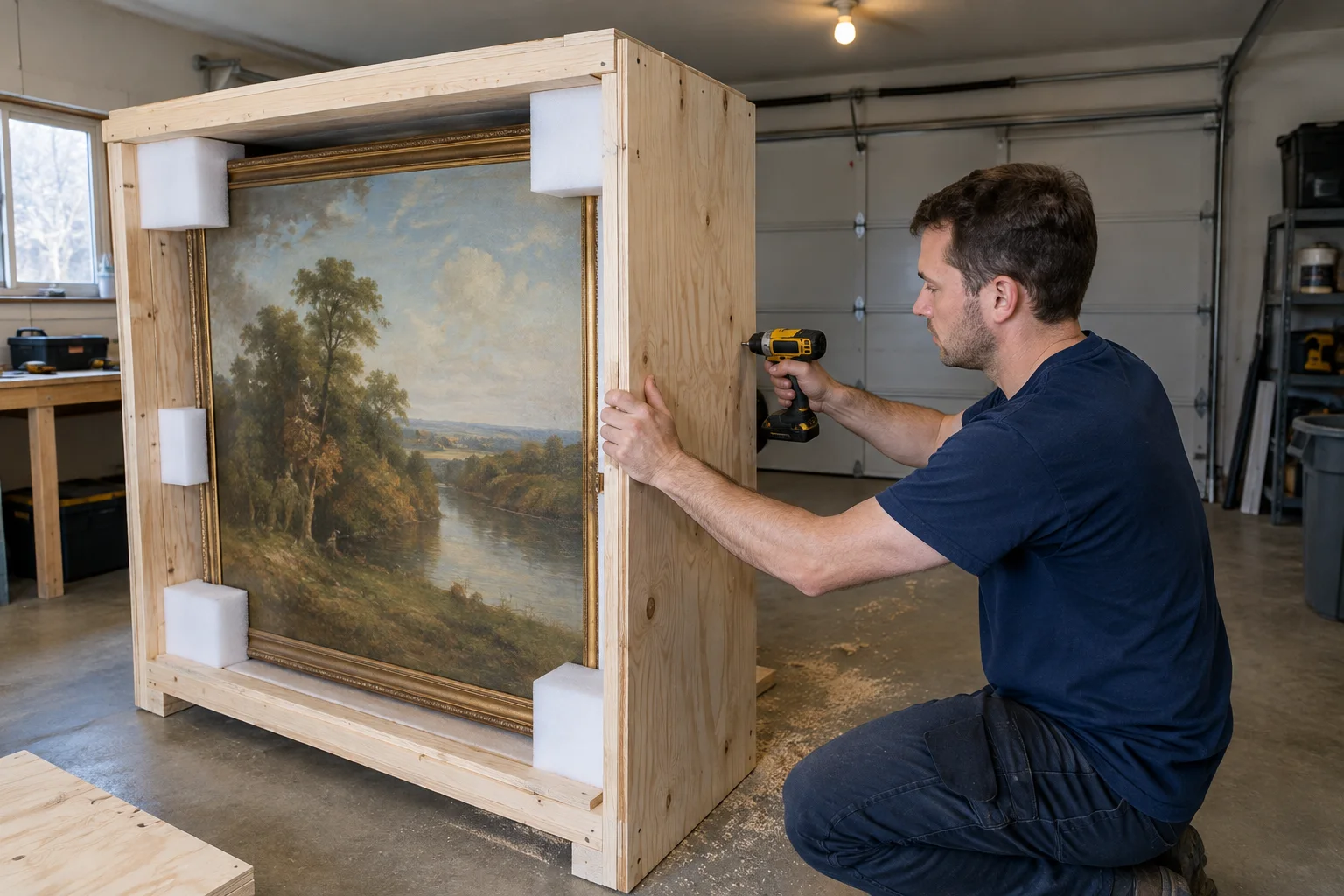
Packing changes the picture as well. If you pack your own cartons, the ICC warns, the mover may not be liable for the contents unless the carton itself is visibly damaged. Amenity offers optional liability valuation coverage on items its packers pack, and custom crating is available for glass, art and other fragile pieces.
Planning a move in Yorkville?
Book a free, no-obligation estimate with Amenity’s office. One household per truck, licensed since 1986.
Worked examples at 60 cents a pound
Released value pays by weight, not by worth, so light and valuable things fare worst; the table shows the most a mover would owe at 60 cents per pound per article for some typical household items.
| Item (example weight) | Most the mover owes | What to consider |
|---|---|---|
| Flat-screen TV, 40 lb | 24 dollars | Use the original box if you kept it |
| Laptop computer, 5 lb | 3 dollars | Carry it yourself |
| Solid wood dresser, 150 lb | 90 dollars | Refinishing a scratched top can cost more |
| Framed mirror, 30 lb | 18 dollars | Ask about a mirror carton or custom crate |
| Sterling flatware set, 10 lb | 6 dollars | May exceed 100 dollars per pound; declare it or carry it |
The same dresser under Full Value Protection would be repaired or replaced with one of like kind and quality, subject to the tariff’s terms and any deductible you chose. That difference is what the extra valuation charge buys.
Choosing a protection level for your household
Choose by weighing what you could lose against what each level costs, starting from an honest list of your most valuable and most fragile belongings. Amenity’s estimator explains the options during the free in-home estimate for homes in Yorkville, Plano, Sugar Grove and nearby towns.
- List items worth more than 100 dollars per pound, such as jewelry, silver, art and collectibles, and decide which to carry and which to declare in writing.
- Ask your homeowners or renters insurer what, if anything, your policy covers in transit.
- Ask what deductible levels come with Full Value Protection or Replacement Value, and how each changes the charge.
- Set a declared value near what replacing everything would cost; declaring less than actual value reduces what you can recover.
- Photograph valuable furniture and electronics before moving day, and read the condition notes on the crew’s inventory.
- Keep perishable, dangerous and hazardous items out of the shipment; our guide to what movers will not move lists them.
- Get your choice in writing; the ICC’s smart tips say to discuss loss and damage options and put them on paper.

Filing a claim if something arrives damaged
Note any damage on the inventory or delivery receipt before you sign, then file a written claim: within 9 months of delivery on an interstate move, or within 90 days of delivery on an Illinois move, as the ICC directs.
For both kinds of move, the mover must acknowledge a written claim within 30 days and resolve it within 120. Describe each item, attach copies of the inventory and bill of lading, and keep damaged pieces for inspection; repairing them first can weaken your claim. If you cannot agree, interstate carriers must offer neutral arbitration, and Illinois offers ICC mediation followed by arbitration. The out-of-state moving page covers the federal arbitration rules, and our guide to moving company red flags shows how to check a mover before you sign anything.
More long-distance moving services
 Out-of-State MovingInterstate moves under Wheaton Van Lines authorityLearn more →
 Long Moves Within IllinoisYorkville to Champaign, Peoria, Springfield, Rockford and beyondLearn more →
Back to Long-Distance Moving in Yorkville · all moving services
Available across the Yorkville area
Frequently asked questions
Is moving valuation the same as moving insurance?
No. Valuation is the mover’s own liability for loss or damage, set by the level you choose on the bill of lading. Insurance is a separate policy from an insurance company. A mover that sells you third-party insurance must give you the policy or written proof when you buy it. Disputes with that insurer are handled under the policy, not FMCSA’s mover rules.
What does released value protection cover?
Released value covers lost or damaged items at no more than 60 cents per pound per article. It costs nothing extra, but it pays by weight rather than value, so a 5-pound laptop is worth at most 3 dollars in a claim. On interstate moves you get it only by signing a waiver of Full Value Protection; on Illinois moves it is the default.
Is Full Value Protection worth the extra cost?
It depends on what you are moving and what your other coverage includes. Full Value Protection obliges the mover to repair, replace or pay for lost or damaged items, which matters most for furniture, electronics and anything hard to replace. Compare the quoted charge and deductible with what released value would pay for your most valuable pieces, and check your homeowners policy first.
Who is the most reliable moving company?
No list can answer that for your move, but you can check the signals that matter: an active ICC license for Illinois moves, FMCSA household goods authority for interstate ones, a written estimate after a survey, and valuation options explained in writing. Amenity holds ILCC 73744 MC-C, has been BBB accredited since August 25, 2017, and moves interstate under Wheaton’s USDOT 70719.
Does homeowners insurance cover belongings during a move?
Sometimes, partly, and on the policy’s own terms, so ask your insurer before moving day. Amenity suggests checking whether your existing policy already covers a long-distance move. Whatever your policy says, the mover’s valuation level still decides what the mover itself owes for loss or damage in its care, so choose that level deliberately as well.
Do I need to declare jewelry and other valuables?
Items worth more than 100 dollars per pound, such as jewelry, silverware and some antiques, must be listed in writing or the mover may limit its liability for them. The simpler course for jewelry, cash, important papers and medicines is the one the ICC recommends: carry them with you instead of shipping them on the truck.
What protection applies to boxes I pack myself?
The valuation level you choose still applies to them, but a claim is easier to dispute. Federal rules list improper packing of containers you pack yourself among the shipper actions that can reduce a mover’s liability, so pack fragile items with plenty of cushioning and note any carton damage at delivery. Amenity offers optional valuation coverage on items its own packers pack; see packing services.
Sources
- Appendix A to Part 375 — Your Rights and Responsibilities When You Move — eCFR, National Archives
- 49 CFR 375.201 — What is my normal liability for loss and damage? — eCFR, National Archives
- 92 Ill. Adm. Code 1457.150 — Shipper Valuation Coverage — Illinois General Assembly, Joint Committee on Administrative Rules
- Household Moves in Illinois: A Consumer's Guide (rev. 3/2026) — Illinois Commerce Commission
- Long-Distance Movers for Chicagoland — Amenity Moving & Storage
Who handles your move
Yorkville Movers is operated by Amenity Moving & Storage Inc., 10028 Mandel St, Plainfield, IL 60585 — a family-run Illinois mover since 1986 whose crews dispatch to Yorkville and Kendall County from its Plainfield warehouse. Illinois household goods license ILCC 73744 MC-C. Interstate moves are transported under the authority of Wheaton Van Lines, Inc. (USDOT 70719, MC-87113), for which Amenity is an authorized agent. See licenses & disclosures.
Last reviewed November 11, 2026 by the Yorkville Movers team against Amenity Moving & Storage’s published service details and the public sources listed above.
Planning a move in Yorkville?
Book a free, no-obligation estimate with Amenity’s office. One household per truck, licensed since 1986.