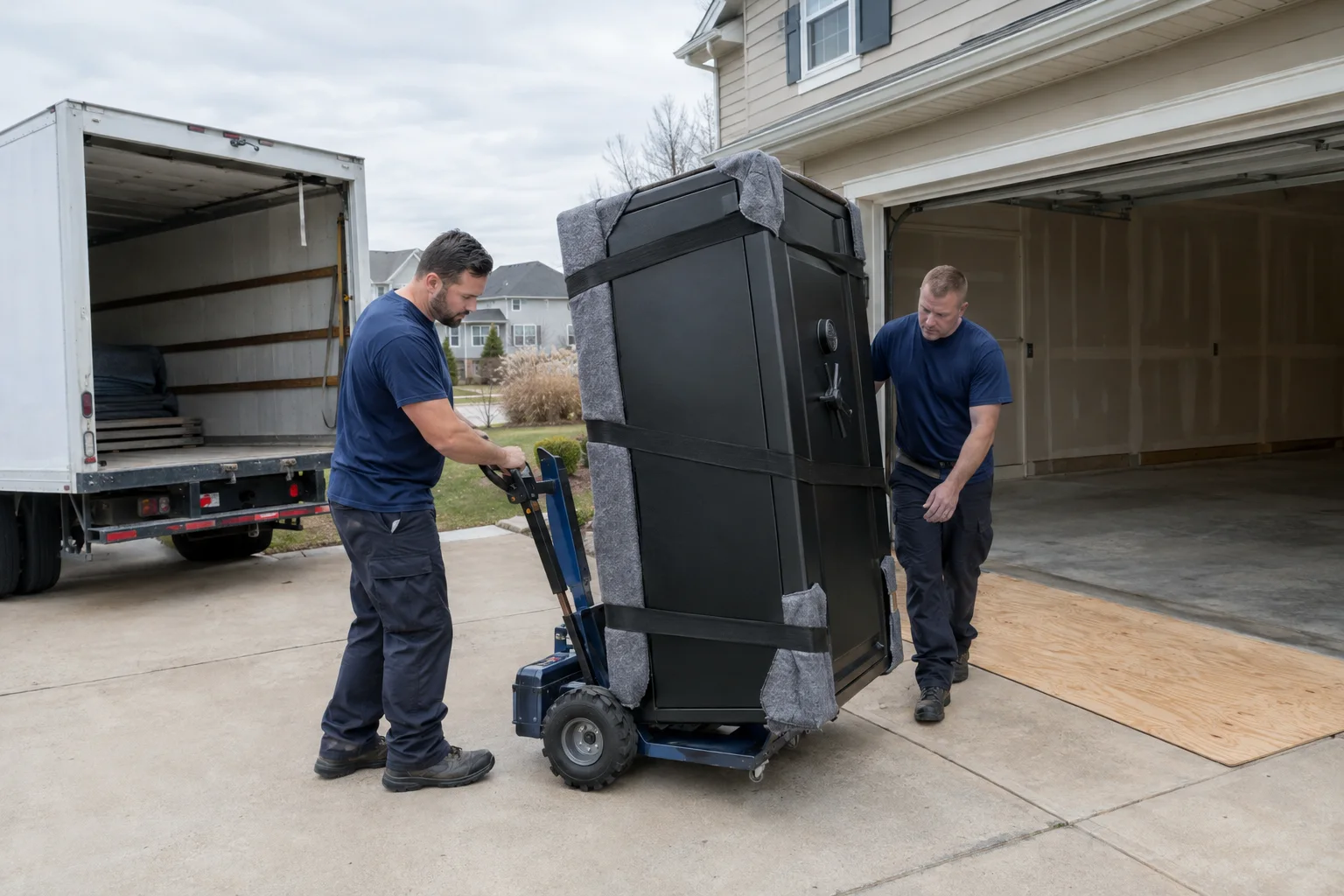
Gun safe movers in Yorkville, IL
Heavy gun safes moved in and out of garages, basements and bedrooms with power dollies, floor protection and a plan for every step and doorway.
- Safes ~300 to 2,000 lb
- Power dollies
- ILCC 73744 MC-C licensed
- Safe storage available
Who moves gun safes in Yorkville, IL, and what do I need to do first?
Yorkville Movers, operated by Amenity Moving & Storage (ILCC 73744 MC-C), moves gun safes of roughly 300 to 2,000 pounds with experienced crews, power dollies and floor protection. Before the crew arrives, you empty the safe and move its contents yourself, unbolt it or have Amenity unbolt it, and clear a path. Safes can also be stored in Amenity’s Plainfield warehouse.
- Safe weights handled
- Roughly 300 to 2,000 lb, in Amenity’s words
- Brands named
- Stack-On, Browning, Liberty ProVault
- Equipment
- Power dollies plus supplies to protect floors, walls and furnishings
- Before the move
- You empty the safe; firearms and valuables travel with you
- Storage
- Climate-controlled warehouse in Plainfield
- Licensed by
- Illinois Commerce Commission, ILCC 73744 MC-C
Free moving estimate
Tell us where and when. Amenity’s office replies directly — no call centers.
Goes straight to Amenity Moving & Storage’s office. Never sold or shared with other movers.
On this page
How gun safe moving works with Yorkville Movers
A gun safe move with Yorkville Movers starts with the details of the safe and both locations; then an Amenity Moving & Storage crew arrives with power dollies and floor protection and moves the empty safe to its new spot. Amenity puts the challenge plainly: gun safes can weigh anywhere from 300 to 2,000 pounds, “so moving one can be a challenge, even if it’s just a short distance.”
Amenity says its crews are prepared for safes of any size and type, naming Stack-On, Browning and Liberty ProVault among the brands. What they bring is specific to the job: experienced crews, high-quality moving equipment, up-to-date power dollies, and supplies to protect the home or building and its furnishings.
Crews dispatch from Amenity’s warehouse at 10028 Mandel St in Plainfield, about 10 miles east of downtown Yorkville, and handle safe moves across Kendall County and nearby towns such as Sandwich, Minooka, Newark and Big Rock. A safe can move on its own or as part of a full local move.
What gun safes weigh, and why it matters
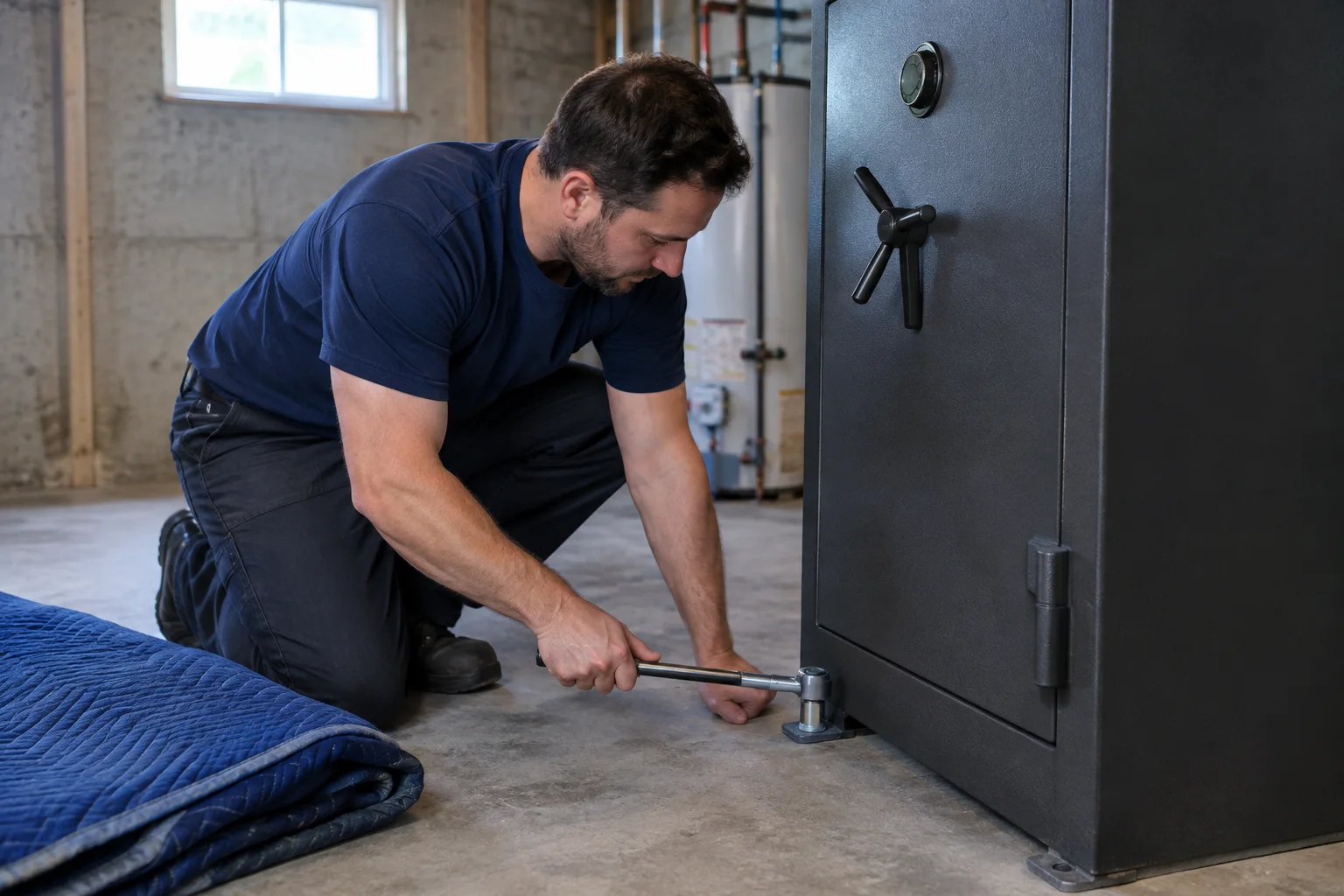
Gun safes run from about 300 pounds for a small model to 2,000 pounds or more for a large one, and Liberty Safe notes that a home-size safe with composite, concrete or pour-in insulation may weigh up to 3,100 pounds. The fire insulation, not the steel alone, is often what makes a big safe so heavy.
Contents add more. Liberty says a loaded safe can often weigh 2,000 or 3,000 pounds, and that emptying it first lowers the weight and keeps the contents from shifting and tipping the safe. Amenity’s advice matches: move the safe’s valuables separately so they aren’t damaged by shifting inside, and the lighter safe is easier to move.
Weight decides almost everything else: the dolly, the number of people, whether a stair is realistic, and which floor can take the safe at the other end. That’s why the first thing Amenity asks for is the make and model, or the safe’s dimensions and weight.

Before the crew arrives: your safe-moving checklist
Before the crew arrives, empty the safe, settle who’s unbolting it, clear a path, and know exactly where it’s going. These steps come from Amenity’s own safe-moving guidance, and each one saves time on moving day.
- Empty the safe completely. Firearms, ammunition, documents and jewelry travel with you, not inside the safe.
- Keep the combination or key with you, not in a moving box.
- If the safe is bolted down, unbolt it before moving day or tell Amenity you need it unbolted.
- Clear a path from the safe to the door and remove throw rugs that could catch dolly wheels.
- Decide where the safe will stand at the new location, and measure the doorways and hallways on the way there.
- Pick a second spot as a plan B in case the first one doesn’t work out.
- Count the stairs at both ends, and note whether the safe sits in the house or the garage.
- Tell the estimator whether the safe will be bolted down at the new location.
Amenity includes the plan B because a chosen spot sometimes proves unsuitable once the safe arrives: a door that can’t swing fully open, a floor register in the way, or a tile floor that shouldn’t take anchors. Deciding on the backup before the crew is holding 900 pounds keeps the day moving. The in-home estimate guide explains what else the estimator will ask.
Firearms, ammunition and Illinois law
Yorkville Movers moves the empty safe, not what goes in it: you empty the safe first and transport your own firearms and ammunition under Illinois law. Plan to carry them yourself rather than packing them for the truck; the guide to what movers won’t move or pack covers other items to keep with you.
The Illinois State Police brochure Transport Your Firearm Legally says a firearm being transported must be broken down in a non-functioning state, not immediately accessible, or unloaded and enclosed in a case, firearm carrying box, shipping box or other container by a person with a valid FOID card, or carried under the Firearm Concealed Carry Act by a licensee.
The same ISP brochure covers two points that matter in a move. Illinois residents who acquire or possess firearms or ammunition must generally have a valid FOID card or Illinois Concealed Carry License in their name, and new residents have 60 calendar days after getting an Illinois driver’s license or ID card to apply for a FOID card. If you already hold a FOID card, ISP says it’s your obligation to give ISP your current address after you move.
General information, not legal advice
The Illinois State Police notes that its answers are general guidance and don’t replace the statutes, 430 ILCS 65 and 430 ILCS 66. For your situation, check with the ISP Firearms Services Bureau or an attorney.
Planning a move in Yorkville?
Book a free, no-obligation estimate with Amenity’s office. One household per truck, licensed since 1986.
Where a safe can go in a Yorkville-area home
The steadiest place for a heavy safe is usually on concrete, such as a basement floor or garage slab, and Liberty Safe’s use and care guide recommends the basement or lowest level, against an outside wall, for fire protection. The same guide says a safe must not be exposed to weather or excessive humidity, and suggests a moisture barrier between safe and floor to protect the bottom from rust.
Upper floors take more thought. The model residential code sizes floors for an average live load of 40 pounds per square foot in living areas and 30 in sleeping rooms (Table R301.5, as adopted in Washington’s residential code). A 1,000-pound safe on a 3-by-2-foot base puts about 167 pounds on each square foot beneath it. Floors have margins and framing spreads the load, so that isn’t a failure point, but it’s why heavy safes usually go on concrete and why an upper-floor plan deserves a question to your builder or a structural engineer.
| Location | Why people choose it | What to watch |
|---|---|---|
| Basement, concrete floor | Concrete underneath; Liberty’s preferred spot for fire protection | The stair on the way down; dampness, so use a moisture barrier |
| Garage slab | Concrete and usually no interior stairs | Cold, heat and humidity swings; keep the safe out of the weather |
| Main-floor room | Easy access with no stairs | Wood-framed floor under a concentrated load |
| Upper floor or bedroom closet | Close at hand | Stairs plus floor framing; get professional advice for heavy safes |
In Yorkville, where U.S. Census estimates show 64.2% of homes are single-family detached houses and 51.4% were built from 2000 to 2009, the usual choices are a garage slab, a basement or a main-floor room. Liberty also notes that a safe can’t be anchored to a tile floor without risking cracks, so check the flooring at the new spot before you settle on it.
In-home safe moves and safe storage
Beyond house-to-house moves, Amenity moves safes within the same home and stores them while you’re between homes. Both start with the same details: the safe’s make and model or its size and weight, and where it’s going.
In-home safe relocation
Moving a safe from the garage to the basement, from one room to another, or between floors is often harder than moving it across town, because the whole job is stairs and turns. The in-home safe relocation page covers stair moves, floor choices and re-anchoring in detail.
Safe storage
If your closing dates don’t line up or you’re building, Amenity can store the empty safe in its climate-controlled Plainfield warehouse, where only Amenity personnel have access. The safe storage page explains how it works, and moving and storage covers the rest of the household.
What affects the time and cost of moving a safe
Safe weight, stairs, the distance between floors or homes, and whether the safe is bolted down decide how long a safe move takes and what it costs. Yorkville Movers doesn’t publish safe-moving prices, because a 400-pound safe in a garage and a 1,500-pound safe in a basement are very different jobs.
| Factor | Why it changes the job |
|---|---|
| Weight and size | Heavier safes need more people, heavier equipment and wider clearances |
| Stairs | Every step adds time and risk; basement and upper-floor moves add the most |
| Bolted down | Unbolting before the move, and re-anchoring plans at the new spot |
| Path and flooring | Thresholds, tight turns, tile and hardwood need extra protection or a different route |
| Alone or with a household | A safe added to a full move shares the truck and crew |
| Distance and storage | Local hourly billing, longer-distance pricing, or a warehouse stay in between |
Under the Illinois Commerce Commission’s consumer guide, moves within Cook, DuPage, Kane, Kendall, Lake, McHenry and Will counties, or under 50 miles, may be billed by workers and hours, while longer moves are priced by weight and distance. A safe that heads out of state travels with your household under Wheaton Van Lines’ authority as part of a long-distance move. For how written estimates are built, see the guide to how moving costs work in Yorkville.
Moving a safe yourself versus hiring a crew
Liberty Safe, which builds gun safes, says it never recommends that people try to move a heavy safe on their own, and its own moving tips explain why. The table sets the do-it-yourself requirements Liberty describes against what a professional crew brings.
| Point | Doing it yourself (Liberty's advice) | Hiring Amenity |
|---|---|---|
| Equipment | A heavy-duty appliance dolly rated for at least 800 lb, with straps | Up-to-date power dollies and protective supplies |
| People | Never alone; at least three strong helpers | An experienced crew sized at the estimate |
| Stairs | Never a standard dolly on stairs; confirm the stair can bear the weight | Stairs counted and planned before moving day |
| Handling | Never apply significant force to the handle | Safe strapped to the dolly, never moved by its handle |
| Home protection | Padded blankets to protect the safe, door frames and walls | Supplies to protect the home and its furnishings |
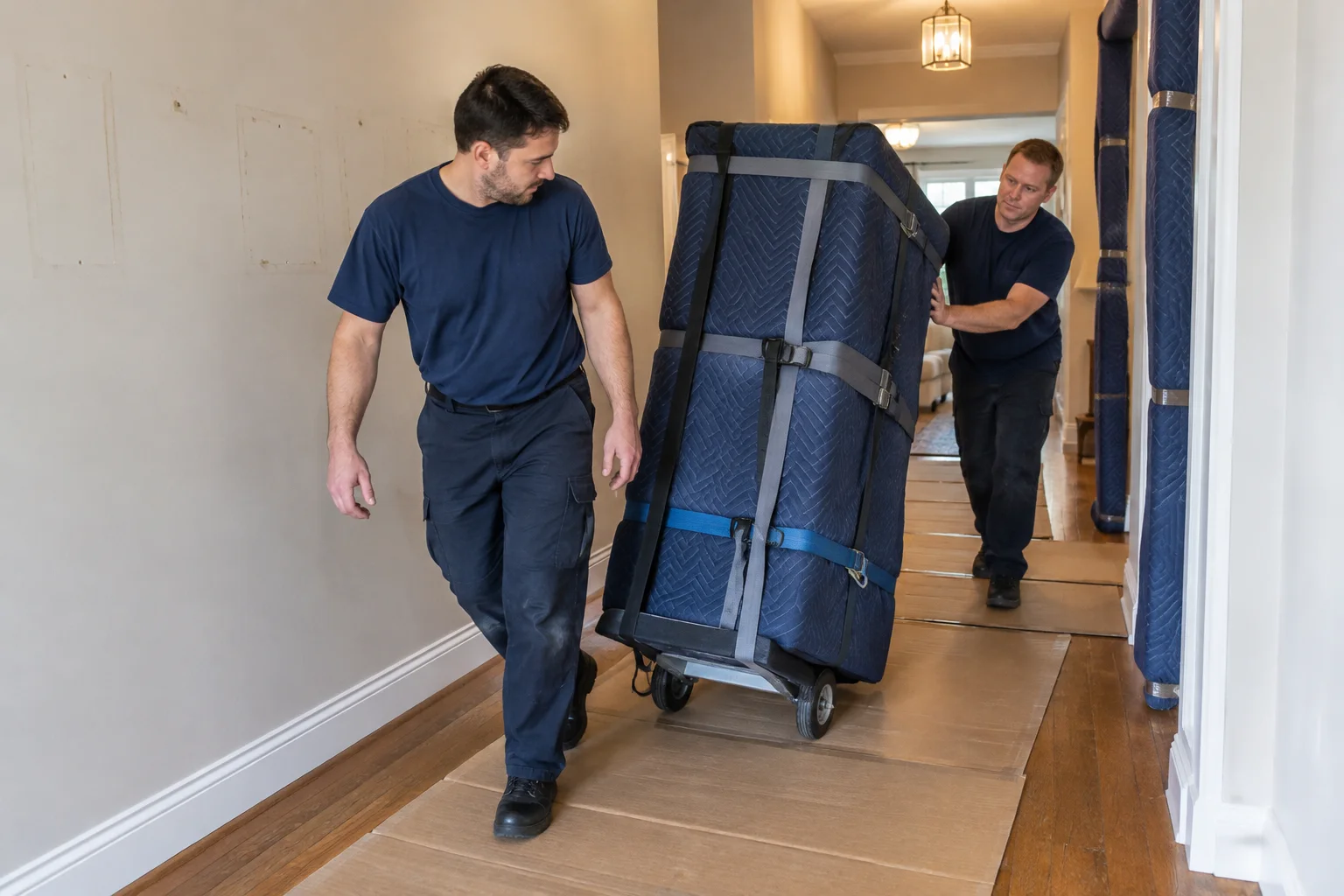
If you’re still weighing it, compare the cost of a crew with the cost of a cracked tile, a gouged stair tread, a bent handle or an injury. A safe that tips doesn’t stop until it hits something.
Gun Safe Moving services
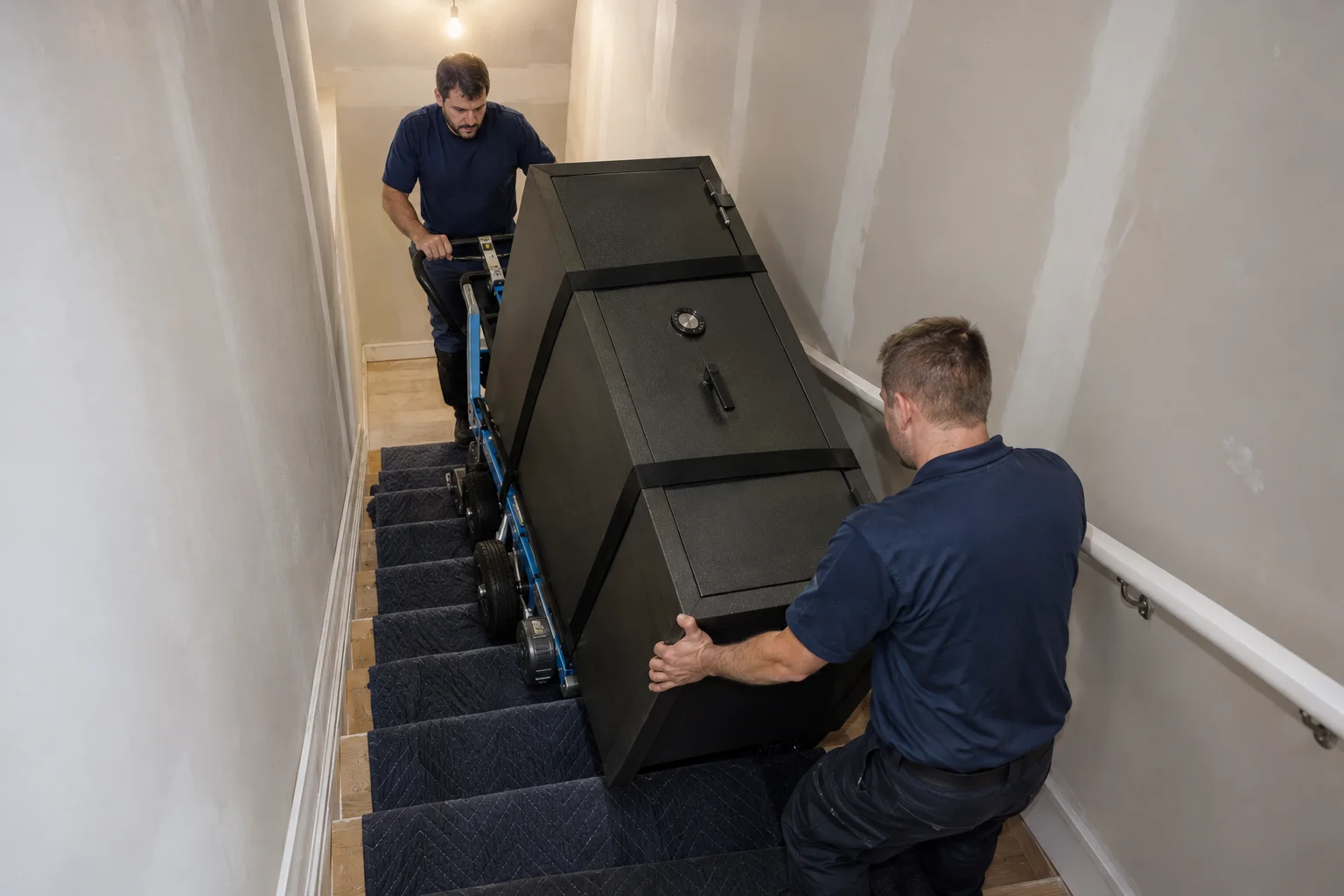 In-Home Safe RelocationGarage to basement, room to room, floor to floorLearn more →
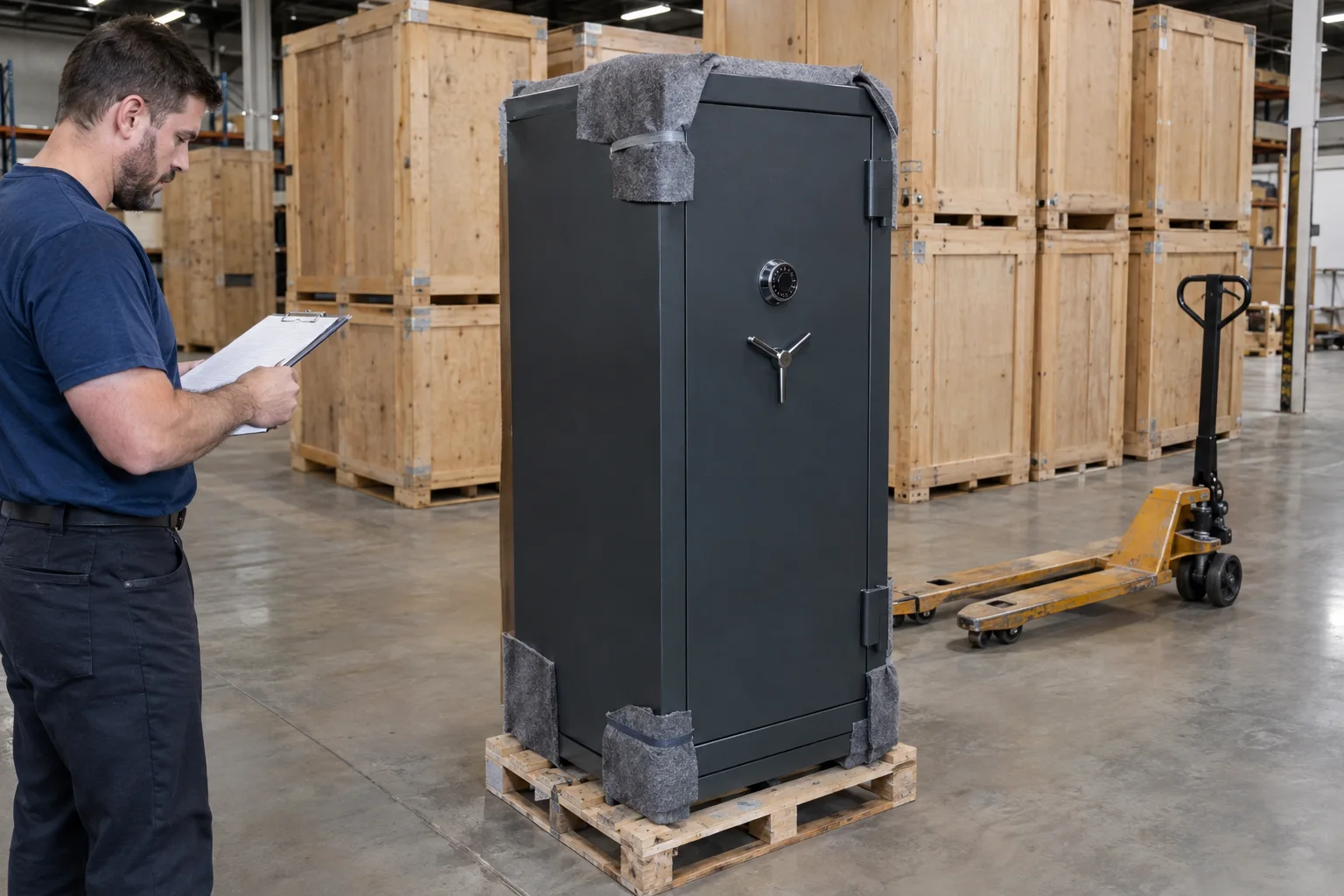 Safe StorageStore a safe in Amenity's warehouse during a moveLearn more →
Where we provide gun safe moving
Related moving services
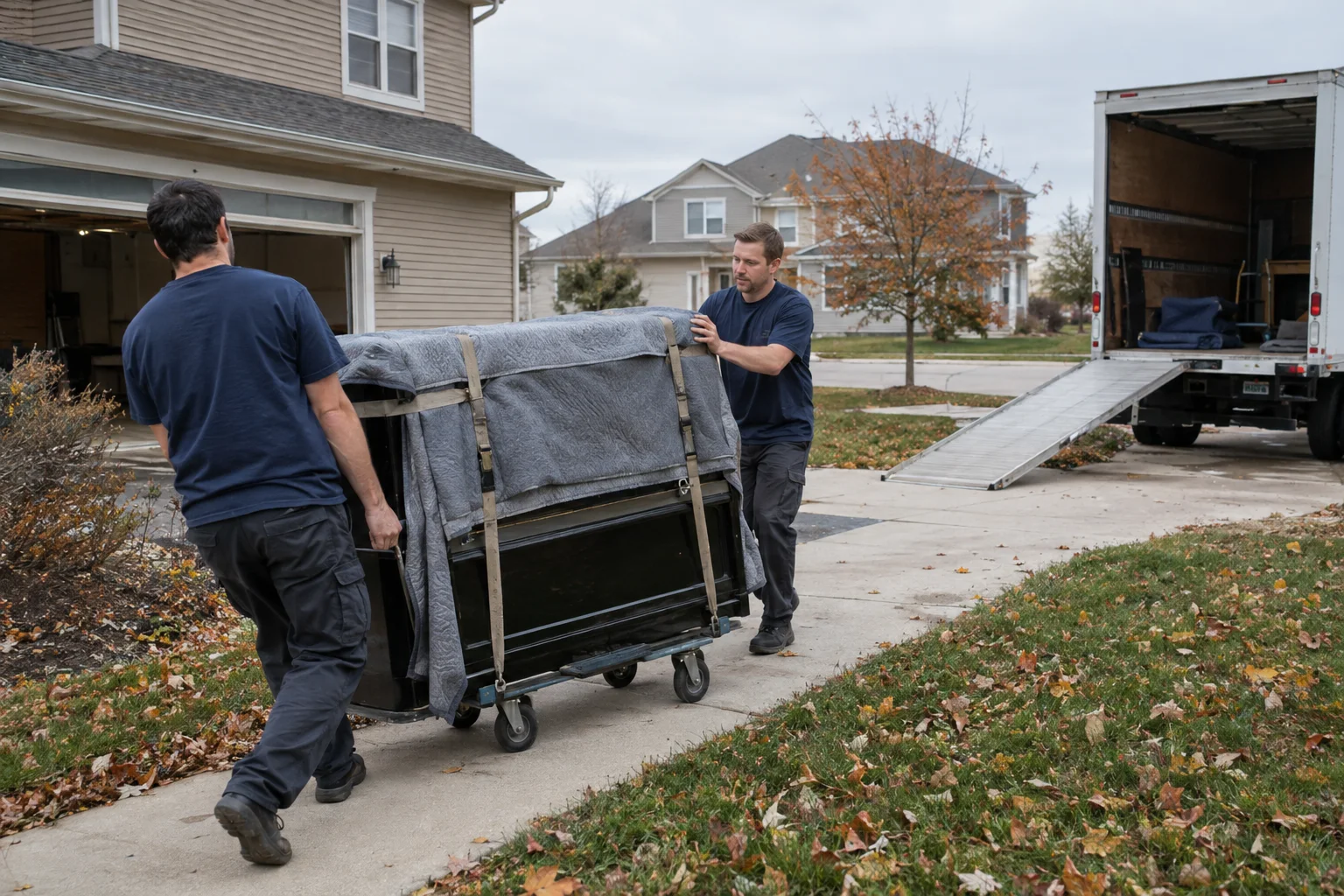 Piano MovingGrands, uprights, spinets, consoles and organsLearn more →
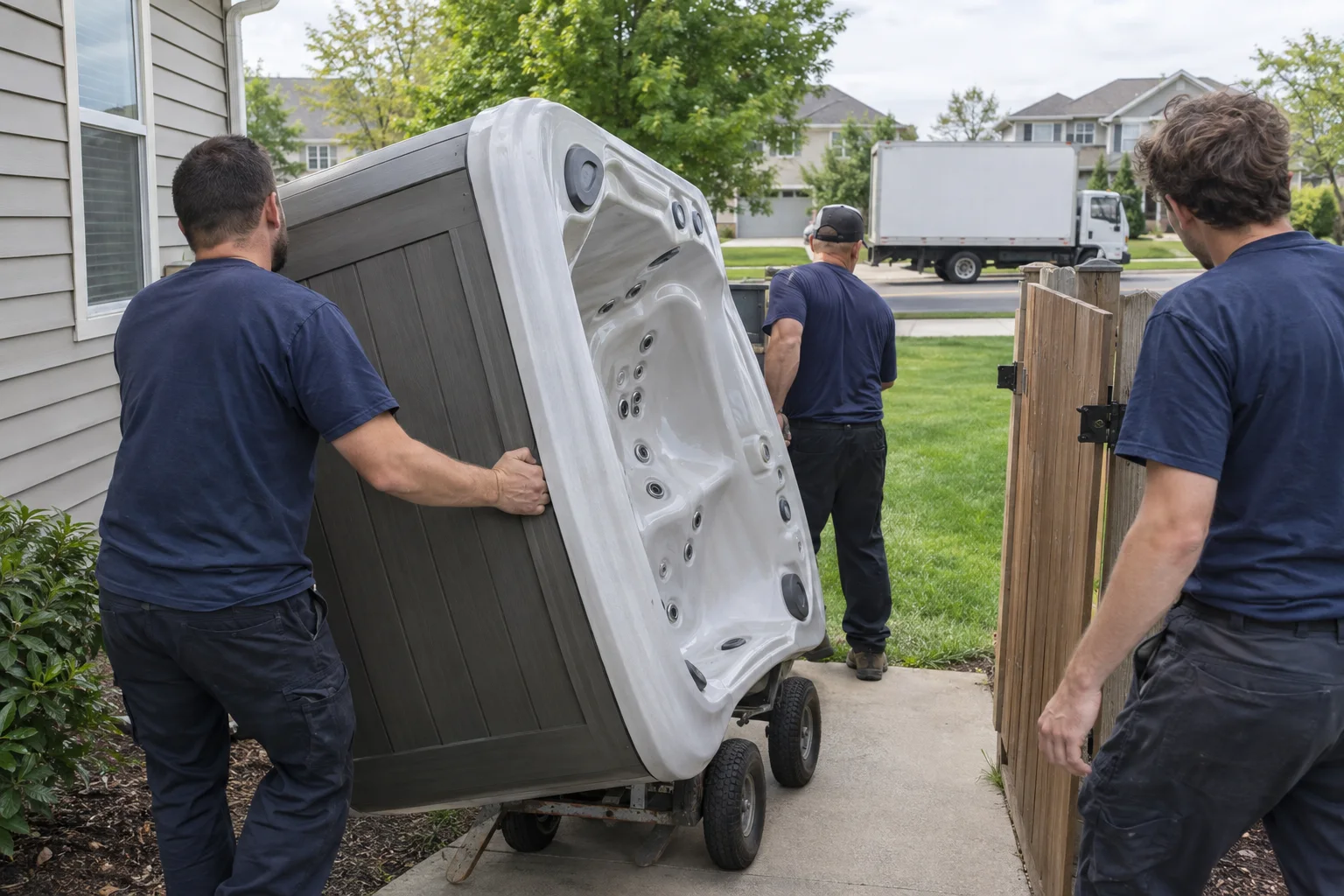 Hot Tub & Spa MovingHot tubs, spas and swim spas moved, stored or removedLearn more →
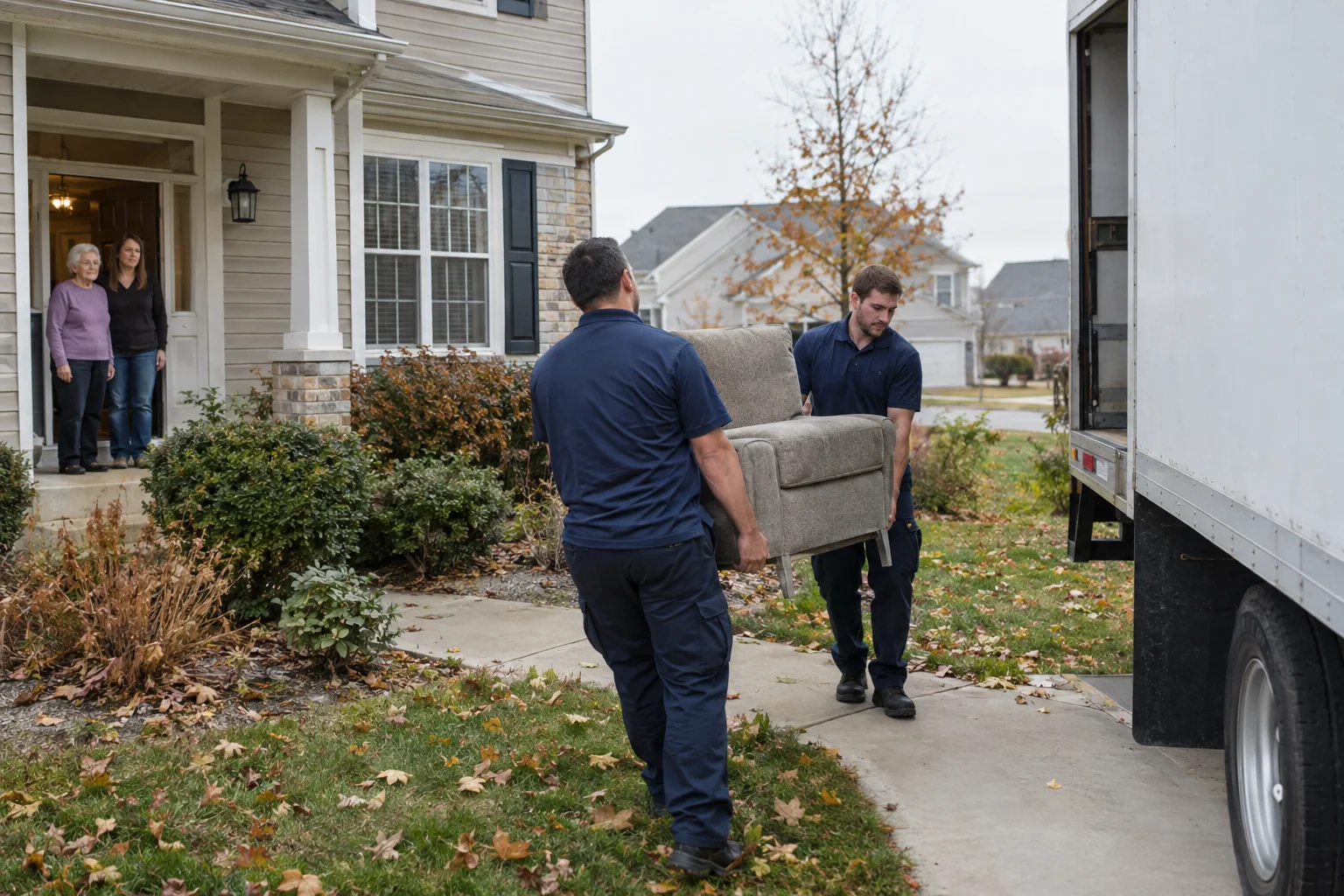 Senior Moving & DownsizingMoves to smaller homes, senior living and family homesLearn more →
Frequently asked questions
How much does it cost to move a gun safe?
It depends on the safe’s weight, the stairs at both ends, whether it’s bolted down, the distance and whether it moves with your household, so Yorkville Movers quotes after a free estimate instead of publishing a price. Illinois lets local moves within the seven-county area, or under 50 miles, be billed by workers and hours, while longer ones are priced by weight and distance.
Will regular movers move a gun safe?
Not every mover takes safes, so ask directly and ask about weight limits and stairs. Amenity Moving & Storage, which runs Yorkville Movers, moves gun safes of roughly 300 to 2,000 pounds and names Stack-On, Browning and Liberty ProVault among the brands it handles. Have the make and model, or the dimensions and weight, ready when you call.
What's the safest way to move a large gun safe?
Empty it, unbolt it, measure the route and let a professional crew move it on equipment rated for its weight. Liberty Safe never recommends moving a heavy safe on your own and warns against using a standard dolly on stairs or putting force on the handle. Amenity’s crews use power dollies and protect floors and walls along the way.
How do you move a 500 lb gun safe?
Empty it first, unbolt it from the floor, and strap it upright to a dolly rated well above its weight. Liberty Safe recommends a heavy-duty appliance dolly rated for at least 800 pounds and at least three helpers, and never a standard dolly on stairs. With stairs or tight turns involved, a professional crew with power dollies is the safer choice.
Do I have to empty my gun safe before movers come?
Yes. Amenity asks customers to empty the safe before the crew arrives and to move its valuables separately. An empty safe is lighter, and contents can’t shift, damage each other or tip the safe. Plan to transport firearms and ammunition yourself, following Illinois State Police transport guidance.
Can movers transport my guns?
No. Yorkville Movers moves the empty safe; you transport your own firearms and ammunition. Illinois State Police guidance says a firearm in transit must be broken down, not immediately accessible, or unloaded and enclosed in a case by a person with a valid FOID card, or carried under the Concealed Carry Act. Check the ISP brochure or an attorney for your situation.
Can a gun safe go in the basement?
Yes, and Liberty Safe recommends the basement or lowest level, against an outside wall, for fire protection. The challenge is the stair: count the steps, measure the width and any landing, and tell the estimator. Use a moisture barrier under the safe in a basement, since Liberty warns against excessive humidity. See the in-home safe relocation page for the details.
What should I check before buying a gun safe I may move later?
Measure your entryways, doorways, halls and stairs before you buy, as Liberty Safe advises, and note the safe’s empty weight. Think about where it will live: concrete floors suit heavy safes, and tile can’t take anchors. A safe that fits your current house may face a tighter stair in the next one, so the measurements are worth keeping.
Sources
- Tips for Moving a Gun Safe on Your Own — Liberty Safe
- Gun Safe Use and Care — Liberty Safe
- Transport Your Firearm Legally (ISP 1-154, 7/25) — Illinois State Police
- Moving? You Will Want to Read This First (Consumer Guide) — Illinois Commerce Commission
- WAC 51-51-0301 (IRC Section R301, Table R301.5) — Washington State Legislature
- Yorkville city, Illinois – Profile (ACS 2020–2024 5-year) — U.S. Census Bureau
Who handles your move
Yorkville Movers is operated by Amenity Moving & Storage Inc., 10028 Mandel St, Plainfield, IL 60585 — a family-run Illinois mover since 1986 whose crews dispatch to Yorkville and Kendall County from its Plainfield warehouse. Illinois household goods license ILCC 73744 MC-C. Interstate moves are transported under the authority of Wheaton Van Lines, Inc. (USDOT 70719, MC-87113), for which Amenity is an authorized agent. See licenses & disclosures.
Last reviewed November 11, 2026 by the Yorkville Movers team against Amenity Moving & Storage’s published service details and the public sources listed above.
Planning a move in Yorkville?
Book a free, no-obligation estimate with Amenity’s office. One household per truck, licensed since 1986.