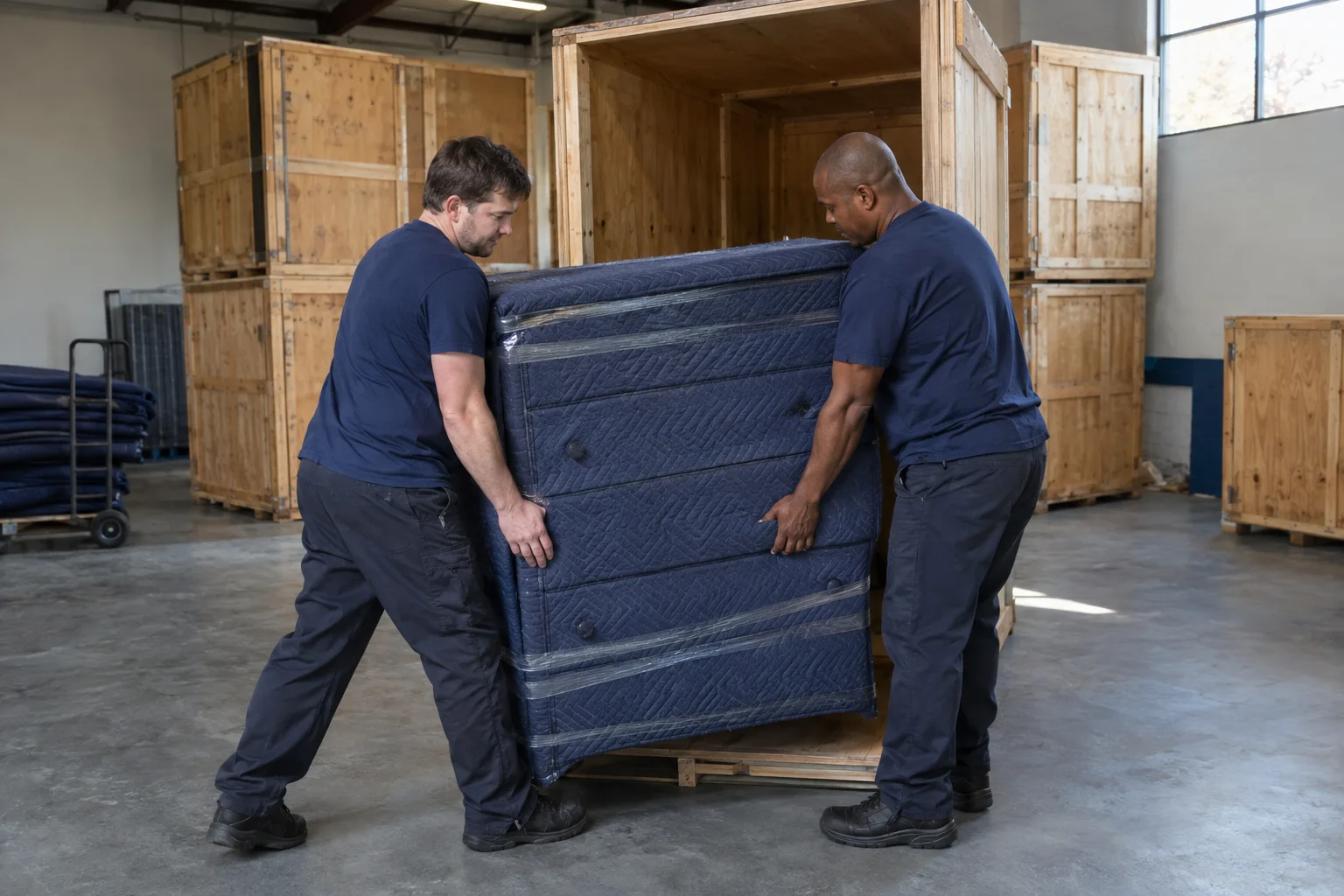
Moving and storage for Yorkville, Illinois households
When move-out and move-in dates don't match, Amenity Moving & Storage crates your furniture in its climate-controlled Plainfield warehouse until the next home is ready.
- 12,000 sq ft warehouse
- Furniture sealed in crates
- One day to several years
- ILCC 73744 MC-C
Where can you store belongings during a Yorkville move, and how does storage with a mover work?
Yorkville Movers, the Yorkville-area brand of Amenity Moving & Storage, stores household goods in Amenity’s 12,000 sq ft climate-controlled warehouse in Plainfield, about 10 miles east of Yorkville. Furniture is wrapped in pads and cardboard, sealed in 8′ x 7.5′ x 5′ wooden crates and logged item by item, for one day to several years. Pricing comes from a free in-home estimate.
- Warehouse
- 12,000 sq ft at 10028 Mandel St, Plainfield, IL
- Distance from Yorkville
- About 10 miles east
- Storage length
- One day to several years
- How furniture is stored
- Pads and cardboard, then sealed 8′ x 7.5′ x 5′ wooden crates; sofas on sofa racks
- Who enters the warehouse
- Amenity personnel only; alarm, lit yard, outdoor camera
- Estimate
- Free, in person, no obligation
Free moving estimate
Tell us where and when. Amenity’s office replies directly — no call centers.
Goes straight to Amenity Moving & Storage’s office. Never sold or shared with other movers.
On this page
How warehouse storage works, from pickup to delivery
Storage through Yorkville Movers means Amenity Moving & Storage keeps your household goods in its own warehouse between the day they leave one home and the day they reach the next. Amenity can pick everything up at your house and truck it to the 12,000 sq ft warehouse at 10028 Mandel St in Plainfield, or you can drop items off yourself. A stay can be as short as one day or as long as several years.
Furniture is wrapped in pads and cardboard, then packed and sealed in large wooden crates measuring 8′ x 7.5′ x 5′. Sofas go on sofa racks instead, which Amenity says keeps them from being crushed or compacted. Each item is entered into Amenity’s inventory database, and you get a detailed list of everything in storage.
- Free in-home estimateAn Amenity estimator walks the house, sees the furniture and cartons, and asks how long the gap between homes may run. Storage is priced from that visit; here is what happens at an in-home moving estimate.
- PackingPack yourself, or book Amenity’s packing services for all or part of the house. Storage cartons may sit for months, so pack them as carefully as any others.
- PickupThe crew loads your goods onto a truck that carries only your household on a local move, then drives them to Plainfield.
- Crating and inventoryAt the warehouse, furniture is padded and sealed into wooden crates, and every item goes into the inventory database. Keep your copy of the list with your closing papers or lease.
- StorageGoods stay in a climate-controlled space that only Amenity personnel can enter, for as long as you’ve arranged.
- DeliveryAmenity’s storage page says your belongings stay put until you’re ready to take them to your new home or have Amenity move them there. Ask at the estimate how much notice a delivery date needs.
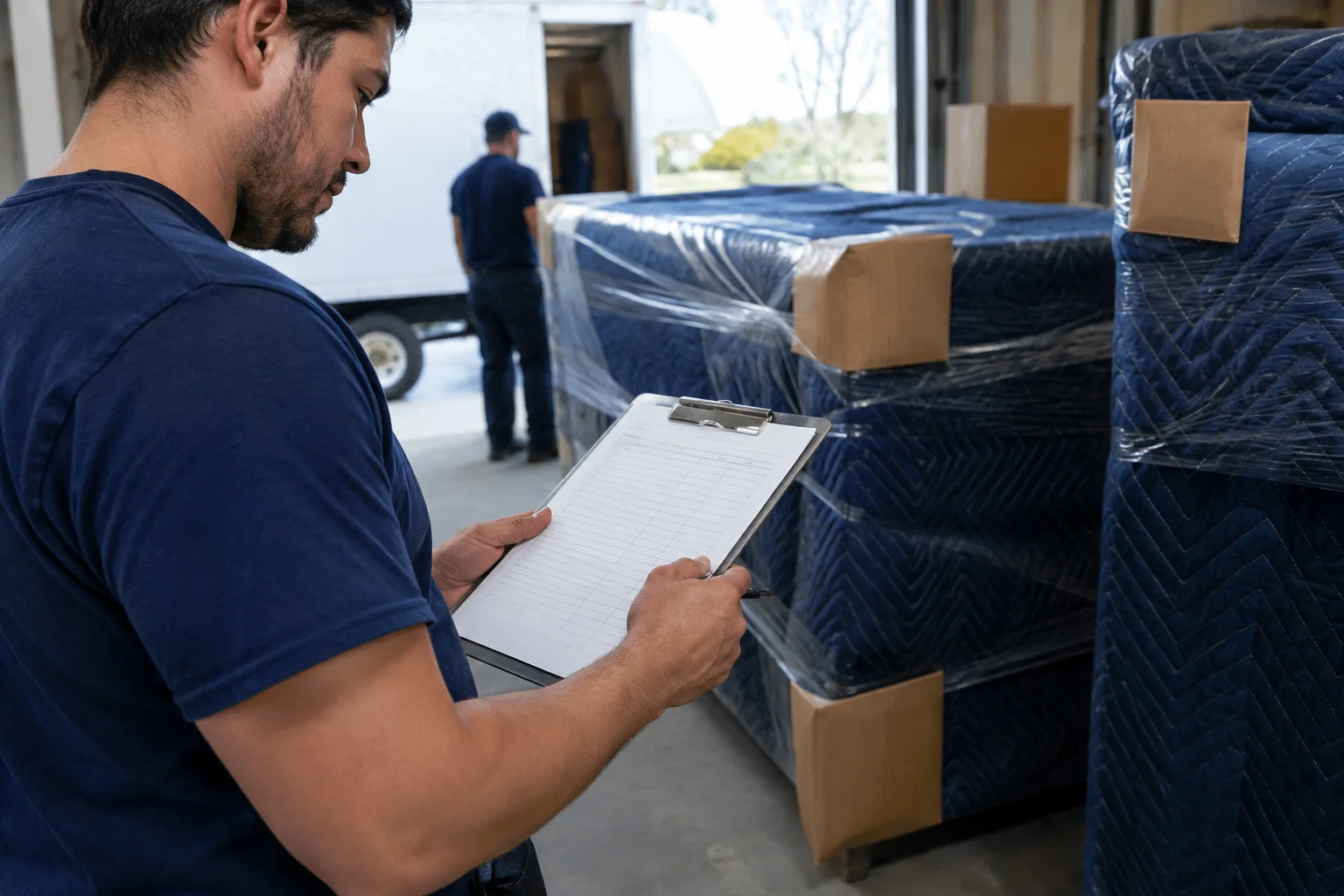
Four kinds of storage, matched to the gap between homes
Most storage requests fall into one of four situations, and each one has its own page with deeper detail.
Short-term storage between closings
Short-term storage covers gaps of a few days to a few months: a sale that closes before the purchase, a lease that ends before keys change hands, or a builder’s completion date that slides. Because Amenity stores for as little as one day, even a weekend gap can be bridged without renting a unit.
Long-term storage with a full inventory
Long-term storage runs months or years: a parent downsizing before the family house sells, a major renovation, or a work stint somewhere else. The inventory list matters more the longer goods sit, because it is how you confirm that everything came back.
Climate-controlled storage for sensitive materials
Wood furniture, leather, rugs, paintings, paper and instruments all react to swings in humidity. Climate-controlled storage explains which materials are most at risk and what conservation bodies such as the Library of Congress advise.
Wooden crate (vault) storage
Wooden crate storage is the method itself: padded furniture sealed inside crates rather than stacked loose in a rented room. That page compares crates, self-storage units and portable containers line by line.

Where to keep your things while you're between homes
You have four realistic places to keep household goods during a move: a moving company’s warehouse, a self-storage unit, a portable container, or space borrowed from family. The right one depends on how long the gap runs, who will do the lifting, and whether you’ll need anything before move-in day.
| Option | Who loads and unloads | Who can reach your goods | Record of what's stored | Fits when |
|---|---|---|---|---|
| Moving-company warehouse (Amenity) | Amenity’s crew, at both ends | Amenity personnel only; ask about retrieval at your estimate | Item-by-item inventory list | The whole household is between homes and one crew should handle it |
| Self-storage unit | You or helpers you hire, with a truck for each trip | You, with your own lock, on the facility’s access schedule | Whatever list you make | You need to reach things often and can do the hauling |
| Portable container | You load it in the driveway; the provider moves the box | Depends on the provider and where the container is kept | Whatever list you make | You want to load at your own pace and have driveway room |
| Family garage or basement | You and whoever helps | You, by arrangement with the owner | None unless you make one | Short gaps, sturdy items, and a willing host |
Illinois law separates these models, too. A business that stores goods for hire is a warehouse under Article 7 of the state’s Uniform Commercial Code, and the same definition says the owner of a self-service storage facility is not a warehouse for that article (810 ILCS 5/7-102). The crate storage page walks through what that difference means for you.
What storage with a moving company costs, and why
The cost of storing with a moving company comes from three pieces: how much you store, how long it stays, and the labor and truck time to move it in and back out. This site doesn’t post storage prices because those pieces differ for every household, so Amenity quotes them after seeing your home at the free estimate.
- Volume. A furnished four-bedroom house fills more crates than a two-bedroom townhome, and anything sold or donated before pickup never needs space.
- Length of stay. Give the estimator your expected date and your worst-case date so both can be priced before you commit.
- Two moves instead of one. Goods are loaded at the old home and delivered later to the new one, so labor and trucking happen twice.
- Packing. Full or partial packing by Amenity adds labor and materials; packing yourself removes that portion.
For how moving labor is billed in Illinois and what adds hours on moving day, see how moving costs work in Yorkville.
- How is storage billed: by crate, by volume or by weight, and how often?
- What handling charges apply when goods go into and come out of the warehouse?
- What valuation coverage applies while goods are stored, and can I declare a higher value in writing?
- How much notice do you need to schedule delivery, and can part of the load come out early?
- If I need one item before delivery, how is that arranged?
- Which items can’t go into storage?
Planning a move in Yorkville?
Book a free, no-obligation estimate with Amenity’s office. One household per truck, licensed since 1986.
Why so many Yorkville moves include a storage stop
Storage comes up often here because the city’s housing is young and many households are recent arrivals, a combination that produces mismatched closing dates. Census Bureau estimates for 2020 to 2024 show 51.4% of Yorkville’s homes were built in the 2000s and another 16.4% in 2010 or later, and 33.6% of households moved into their current home in 2020 or later (ACS 5-year profile).
New construction is where gaps open most: a completion date that depends on final inspections and finish work can slip by weeks after the old house has already sold. Renters, who occupy 20.2% of the city’s homes, run into a related problem when a lease ends before a purchase closes. Residents 65 and older make up 11.3% of the population, and downsizing often means holding furniture that grown children will claim later.
The gaps also stretch between neighboring towns: a townhome sale in Montgomery that closes before a new build is finished, or a rental in Plano that ends a month before the purchase. Amenity’s warehouse sits in Plainfield, within a short drive of both ends of most Kendall County moves.
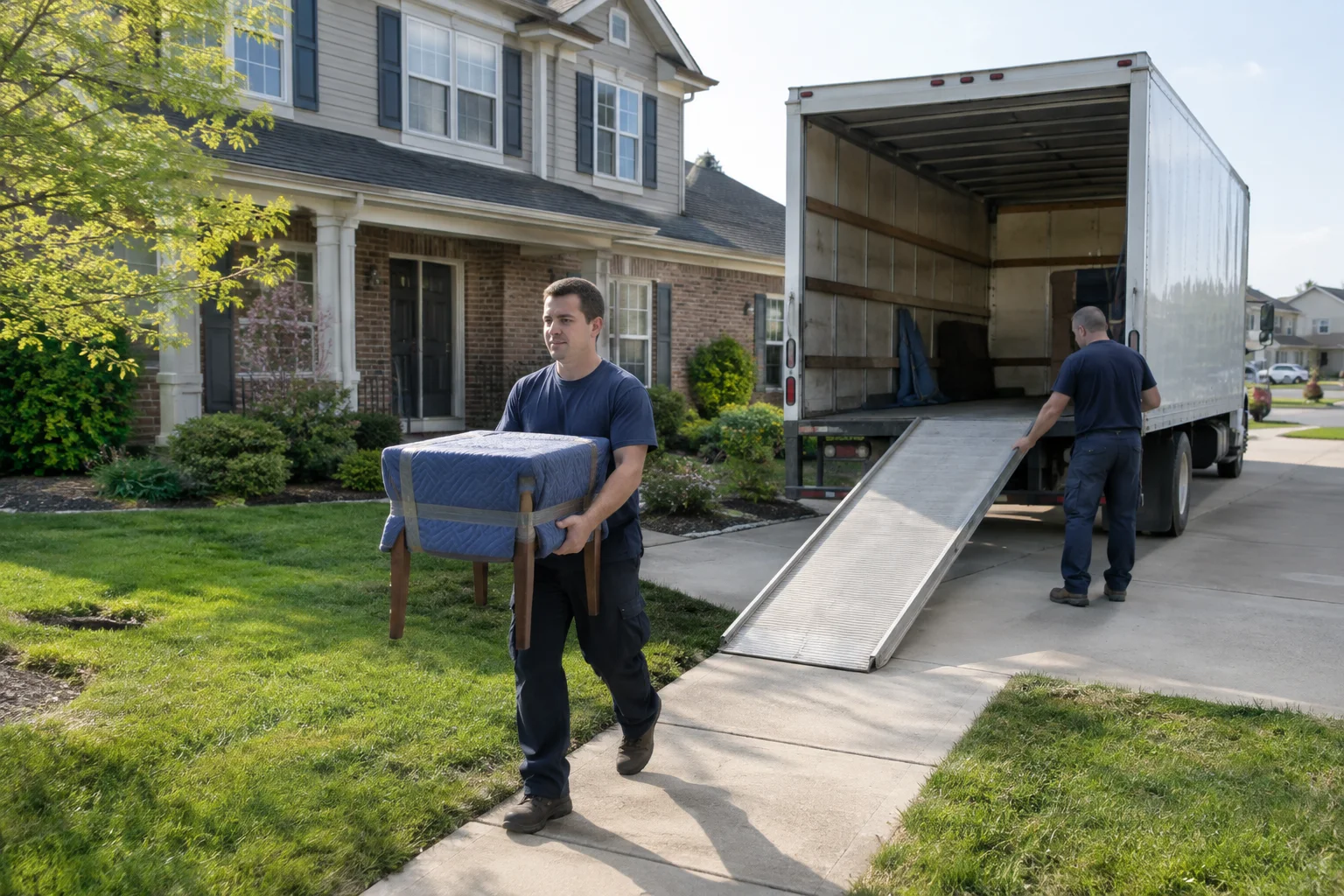
How stored household goods are protected
Protection in Amenity’s warehouse comes from three layers: how each piece is wrapped, who can enter the building, and the written record of what’s inside.
- Wrapping and crating. Pads and cardboard go on first; then the furniture is packed and sealed in an 8′ x 7.5′ x 5′ wooden crate.
- Upholstery on racks. Sofas are stored on sofa racks built for upholstered pieces.
- Restricted entry. Only Amenity personnel have access to the warehouse. Customers don’t get a key or a unit; this is not drive-up self-storage.
- Site security. A well-lit yard, an alarm system and an outdoor security camera.
- Climate control. Goods are kept in a climate-controlled space.
- Inventory. Each item is logged in Amenity’s database, and you receive the detailed list.
Ask for the valuation terms in writing before anything goes in. Under Illinois’ Uniform Commercial Code, a warehouse’s storage agreement may limit the amount of its liability, and the owner of the goods can ask in a record, at signing or within a reasonable time after receiving the warehouse receipt, for higher liability, which can carry a higher rate (810 ILCS 5/7-204).
Amenity describes itself as fully bonded, licensed and insured. Its Illinois household goods license, ILCC 73744 MC-C, can be checked through the Illinois Commerce Commission, which requires that license of anyone moving household goods for hire.
Storage on moves that leave Illinois
On an interstate move, a warehouse stay between pickup and delivery is called storage-in-transit, and federal rules govern how it ends. The mover must notify you in writing at least 10 days before storage-in-transit converts to permanent storage, and the notice has to say that its carrier liability ends on that date and that the warehouse’s own rules and charges apply afterward (49 CFR 375.609).
Amenity handles interstate moves as an authorized agent of Wheaton World Wide Moving, and those shipments travel under the authority of Wheaton Van Lines, Inc. (USDOT 70719). Amenity notes it can connect you with any of more than 300 Wheaton agents across the U.S., which helps when storage near your destination makes more sense than storage in Plainfield. Start with long-distance moving; for a move that stays local, storage is quoted alongside local moving at the same estimate.
Pianos, gun safes and hot tubs in storage
Heavy and delicate items can go into storage as well, but each needs its own handling on the way in and the way out.
- Pianos. Amenity describes its piano storage as a fully gated, climate-controlled facility with security-system monitoring, and the piano is raised while stored. More on piano storage.
- Gun safes. Amenity says safes weigh roughly 300 to 2,000 lb, and they can be stored. Empty the safe first and move the valuables yourself. More on gun safe storage.
- Hot tubs and spas. Amenity stores tubs too. Have the tub drained and disconnected from power before the crew arrives, and know its weight and dimensions.
Moving & Storage services
 Short-Term StorageStorage between closings, leases and builder delaysLearn more →
 Long-Term StorageMonths to years of warehouse storage with a full inventoryLearn more →
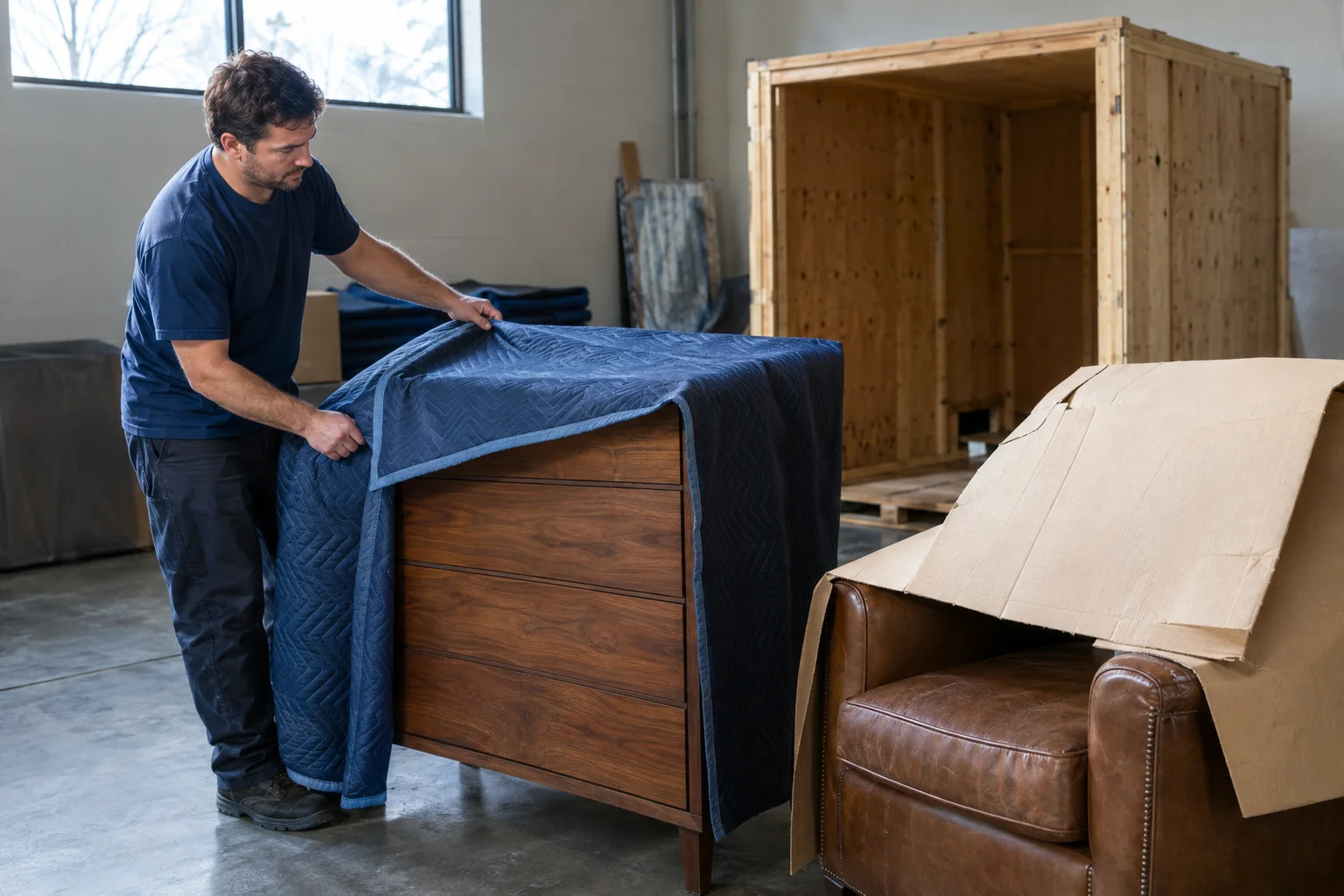 Climate-Controlled StorageFor wood, leather, art, instruments and rugsLearn more →
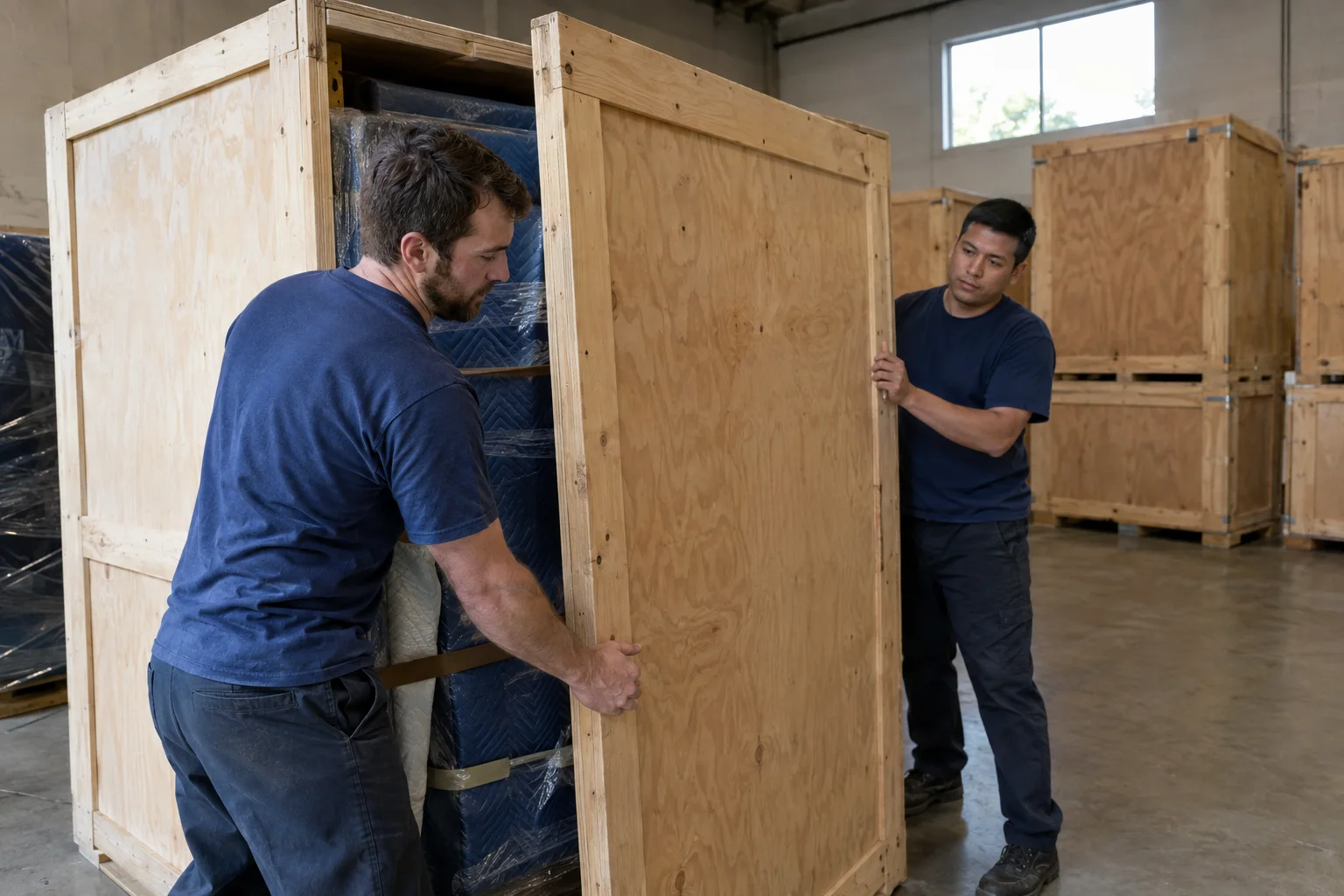 Wooden Crate (Vault) StorageFurniture padded and sealed in 8' x 7.5' x 5' wooden cratesLearn more →
Where we provide moving & storage
Related moving services
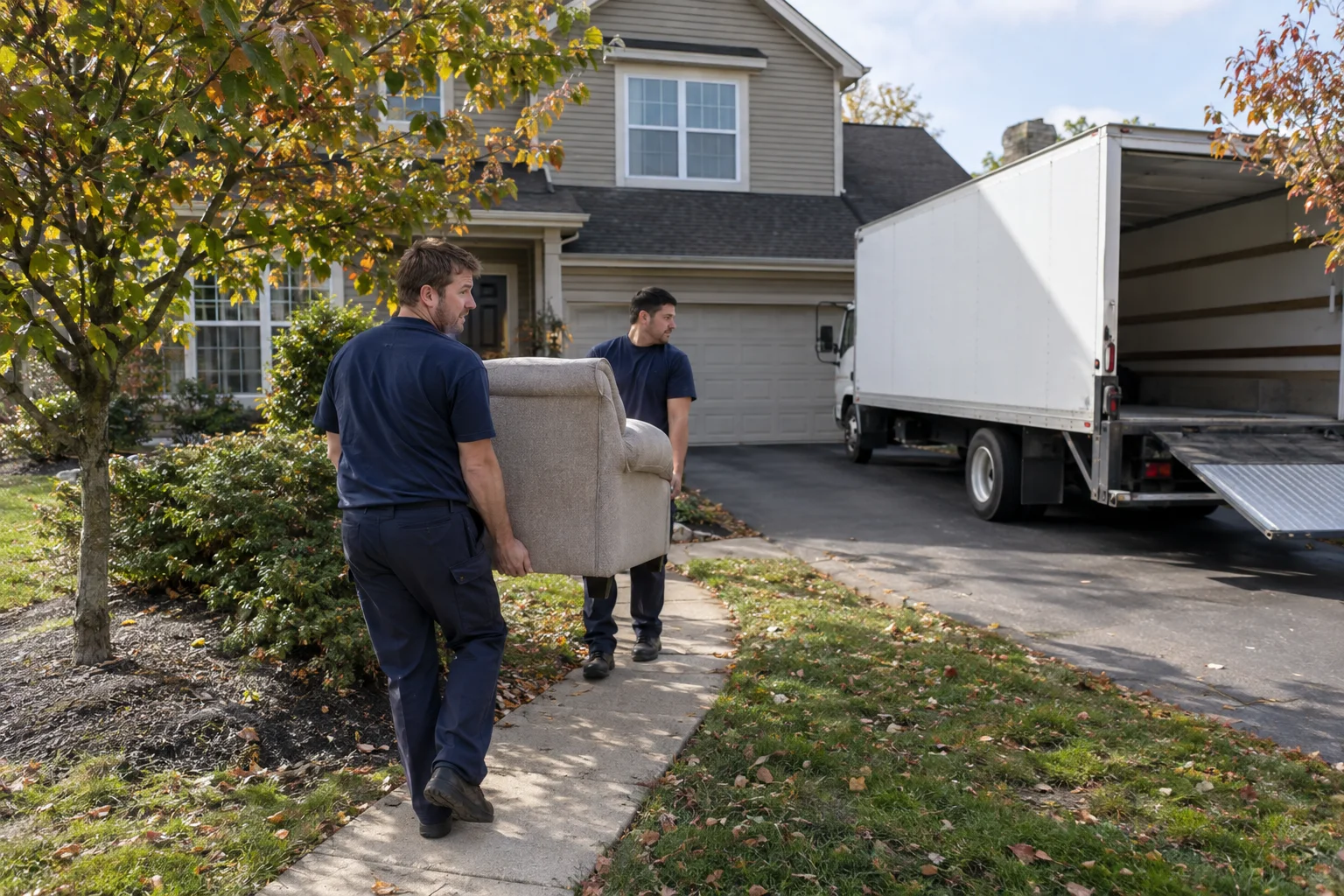 Local MovingHome moves in and around Yorkville, one household per truckLearn more →
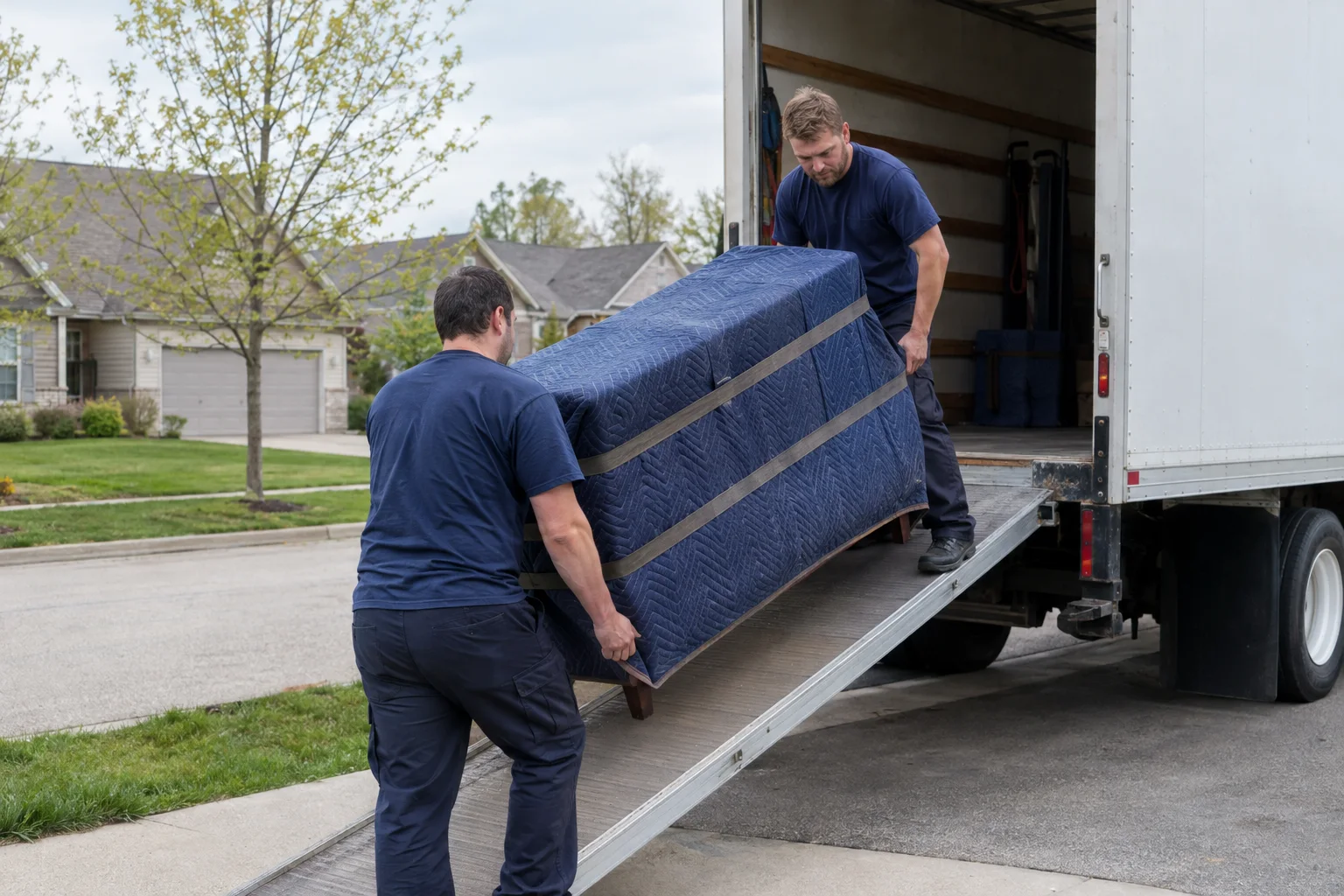 Long-Distance MovingOut-of-state and long Illinois moves through Wheaton World Wide MovingLearn more →
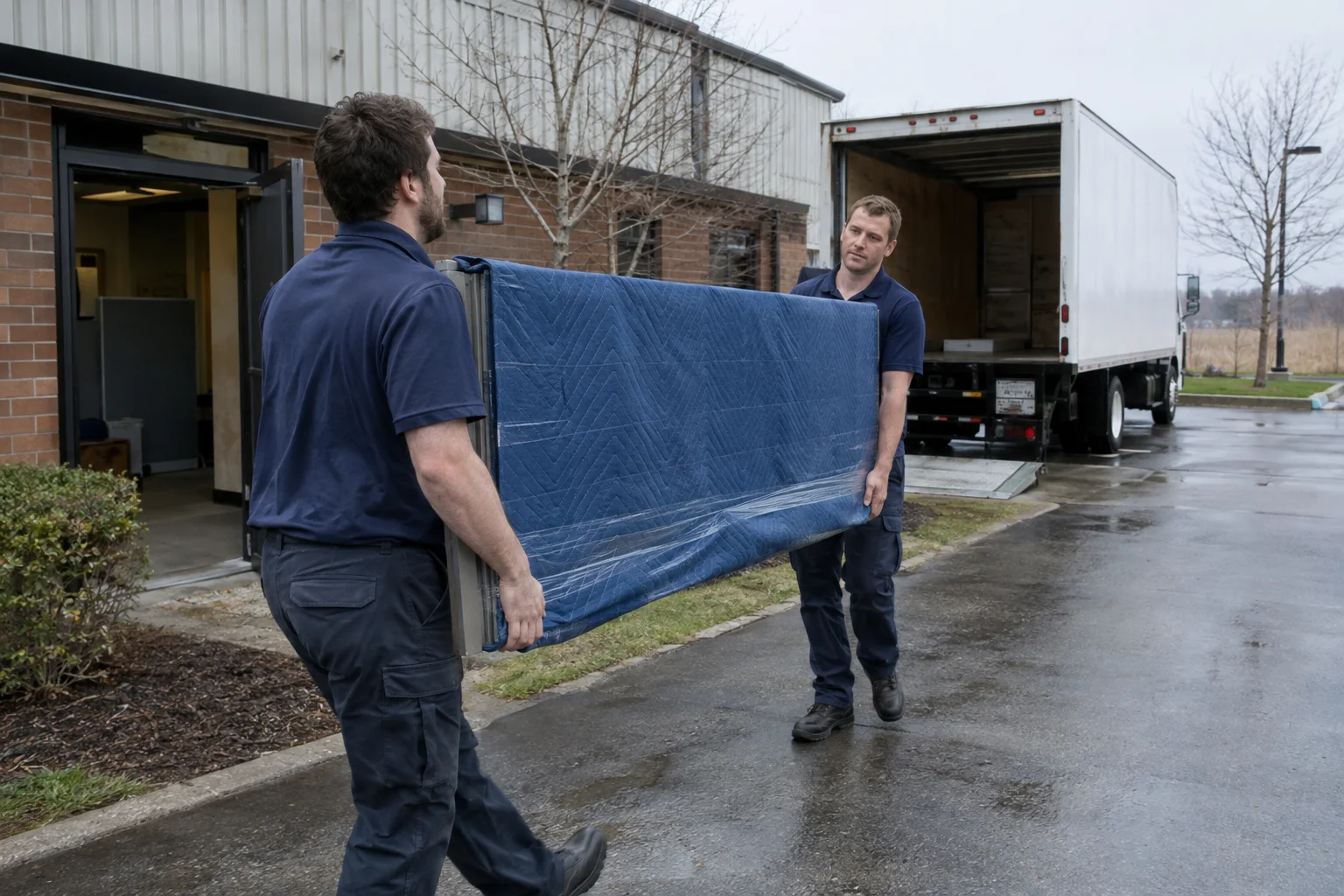 Office & Commercial MovingOffice, retail and corporate relocations with minimal downtimeLearn more →
Frequently asked questions
Where do I put my furniture if my house sells before I can move into the next one?
Put it in storage with your mover so one crew handles it from start to finish. Amenity picks up at your home, pads and crates the furniture in its Plainfield warehouse, and delivers once you close on the next house. Storage can run from a single day to several years. A self-storage unit also works if you’d rather do the loading and hauling yourself.
How much does it cost for a moving company to store your stuff?
It depends on how much you store, how long it stays, and the labor to move it in and back out. Storage rates aren’t published online; Amenity prices storage after a free in-home estimate, where the estimator can see your furniture and boxes. Ask how storage is billed, what handling charges apply, and what valuation coverage applies to stored goods.
Can I visit my things while they're in Amenity's warehouse?
Not the way you would at a self-storage facility. There’s no drive-up unit and no key; only Amenity personnel have access to the warehouse, and furniture is sealed in wooden crates. If you think you’ll need something before delivery, say so at your estimate and ask how retrieving an item is arranged. Better still, keep anything you’ll need during the gap out of storage.
Is the storage warehouse in Yorkville?
No. Yorkville Movers is Amenity Moving & Storage’s Yorkville-area brand, and the warehouse is Amenity’s own building at 10028 Mandel St in Plainfield, about 10 miles east of downtown Yorkville. Crews and trucks dispatch from there, so goods picked up at your house go straight to Plainfield and come back from there when you’re ready.
How long can I keep my belongings in storage?
Amenity offers storage from one day to several years. Short stays usually bridge closings, lease ends or a builder’s late completion date; long stays cover downsizing, renovations or time spent working elsewhere. Give the estimator your expected length and your worst-case length so both can be priced, and ask how much notice the warehouse needs before delivery.
Will I know exactly what's in storage?
Yes. Amenity enters each stored item into its inventory database and gives you a detailed list of everything you store. Check that list against what leaves the house on pickup day, note anything already scratched or loose, and keep a copy with your closing papers. At delivery, the same list is how you confirm everything came back.
What is storage-in-transit?
Storage-in-transit is warehouse storage in the middle of an interstate move, between pickup and delivery. Federal rule 49 CFR 375.609 requires the mover to notify you in writing at least 10 days before it converts to permanent storage, when the mover’s carrier liability ends and the warehouse’s rules and charges take over. Storage on a local Illinois move is arranged as its own service instead.
Is my furniture insured while it's stored?
Ask for the valuation terms in writing before anything goes in. Amenity says it is fully bonded, licensed and insured, but what you can recover for a damaged item depends on the valuation in your agreement. Illinois law lets a storage agreement limit the warehouse’s liability and lets you request higher coverage in writing, possibly at a higher rate. Your homeowner’s or renter’s policy may also apply, so ask your agent.
Sources
- Storage Facilities for Chicagoland – Amenity Moving & Storage — Amenity Moving & Storage
- Yorkville city, Illinois – Census Bureau Profile — U.S. Census Bureau
- 49 CFR § 375.609 – What must I do for shippers who store household goods in transit? — Legal Information Institute, Cornell Law School
- Illinois Statutes Chapter 810. Commercial Code § 5/7-204 — FindLaw (Thomson Reuters)
- Illinois Statutes Chapter 810. Commercial Code § 5/7-102 — FindLaw (Thomson Reuters)
- Household Goods Movers — Illinois Commerce Commission
Who handles your move
Yorkville Movers is operated by Amenity Moving & Storage Inc., 10028 Mandel St, Plainfield, IL 60585 — a family-run Illinois mover since 1986 whose crews dispatch to Yorkville and Kendall County from its Plainfield warehouse. Illinois household goods license ILCC 73744 MC-C. Interstate moves are transported under the authority of Wheaton Van Lines, Inc. (USDOT 70719, MC-87113), for which Amenity is an authorized agent. See licenses & disclosures.
Last reviewed November 11, 2026 by the Yorkville Movers team against Amenity Moving & Storage’s published service details and the public sources listed above.
Planning a move in Yorkville?
Book a free, no-obligation estimate with Amenity’s office. One household per truck, licensed since 1986.