Downsizing movers for a smaller home after years in a bigger one
Fitting a full house into fewer rooms: measure first, sort with the person moving, then pack, move or store only what earns its place.
- Partial or full packing
- Crated storage option
- Amenity personnel only
- Free in-home estimates
What do downsizing movers do, and what is left for the family?
Downsizing movers pack, load, move and place the belongings that fit the smaller home, and store what the family isn’t ready to decide on. Through Yorkville Movers, Amenity Moving & Storage does that physical work with crews from its Plainfield warehouse. Sorting decisions, sales and donation drop-offs stay with the family or a hired move manager, because Amenity doesn’t haul junk or donations.
- First step
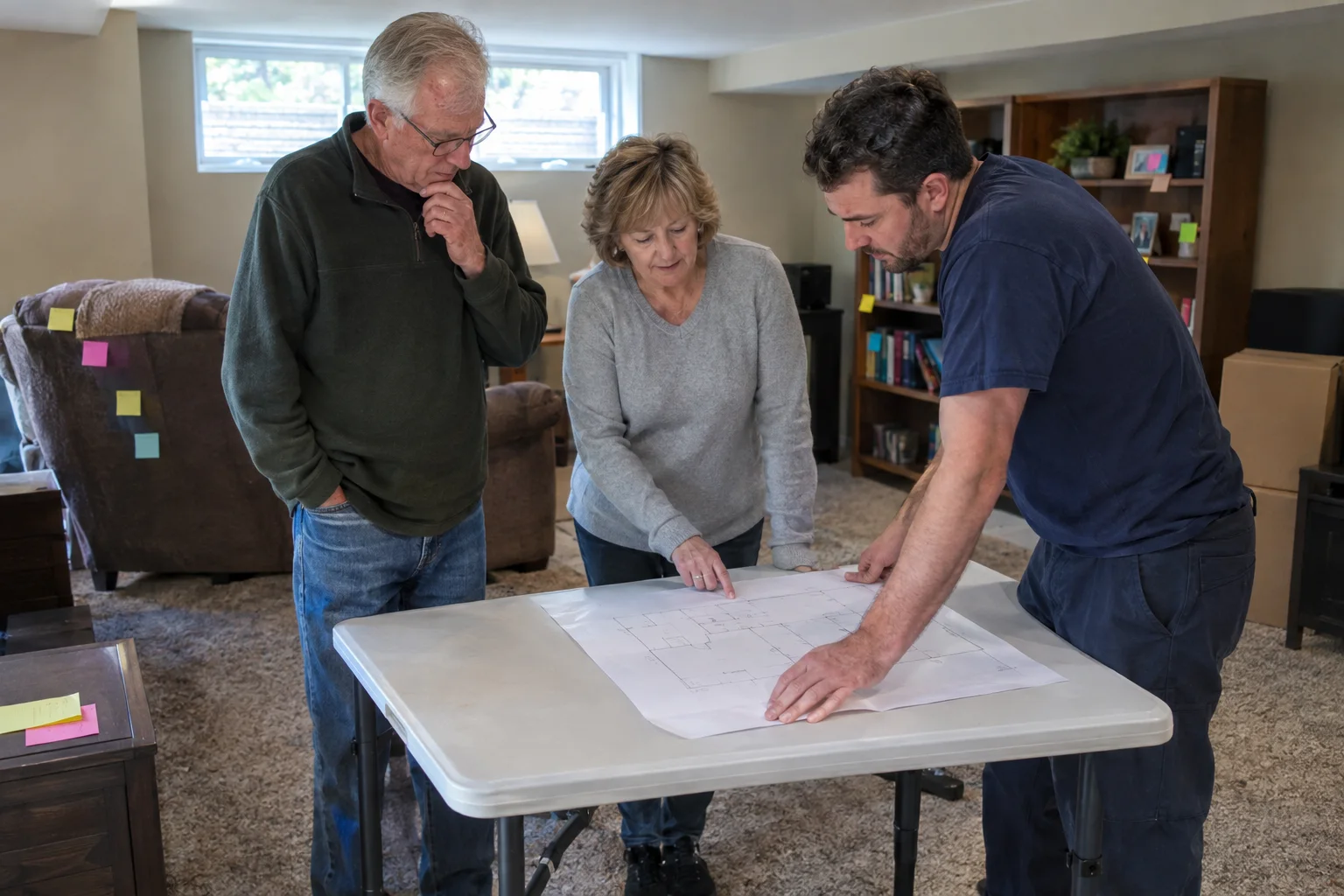
- Measure the new home and sketch a furniture plan
- Packing options
- Full or partial; containers labeled by room
- Leftover furniture
- Family, sale, city bulk pickup or storage
- Storage
- Crated and inventoried, one day to several years
- Not offered
- Junk removal, donation hauling, estate sales
- Licensed by
- Illinois Commerce Commission, ILCC 73744 MC-C
Free moving estimate
Tell us where and when. Amenity’s office replies directly — no call centers.
Goes straight to Amenity Moving & Storage’s office. Never sold or shared with other movers.
What a downsizing move involves
A downsizing move takes part of a household into a smaller home and finds a place for the rest, so the deciding happens before the packing. The belongings usually split four ways: what goes to the new home, what goes to family, what goes into storage, and what leaves through sale, donation, recycling or the trash.
Amenity’s crews handle the first three piles: packing, loading, driving, placing furniture and crating items for storage. The fourth pile belongs to the family, or to a Senior Move Manager if you hire one, because Amenity doesn’t run estate sales, haul donations or do clean-outs. This page is one of two paths under senior moving and downsizing; if the new home is a community with its own move-in rules, start with moves to senior living instead.
| Pile | Where it ends up | Who handles it |
|---|---|---|
| Keep | The new home, placed room by room | Amenity packs, moves and places it |
| Family | A relative’s home, now or later | Plan it at the estimate: a separate delivery or storage |
| Undecided | Amenity’s Plainfield warehouse | Crated and logged in an inventory database |
| Let go | Buyers, charities, city pickups, recycling | The family or a hired move manager |
Measure the new home before sorting anything
Measuring comes first because the new floor plan, not the old attic, decides how much can go. Get the floor plan from the seller, landlord or community, or measure each room yourself, and note where doors, windows and closets fall.
Then measure the furniture you’d like to keep and sketch it onto the plan, or cut paper rectangles to scale and slide them around. The exercise settles arguments: when the sofa and both recliners don’t fit the living room, the plan says so, not a family member. NASMM notes that most Senior Move Managers can draw a customized floor plan if you’d rather hire that out.
Census figures describe the house many local downsizers are leaving: 64.2% of Yorkville homes are single-family detached, the median home has 6.8 rooms, and 51.4% were built in the 2000s (ACS 2020–2024 5-year estimates). Going from a two-story like that to a townhome or apartment cuts several rooms, so the dining room, the basement and any second living area are where the plan gets tested.
- Each room’s wall lengths, minus doors, windows, radiators and vents
- Closet widths and depths, including hanging-rod length
- Doorways, hallways and any stair turns at the new home
- Elevator door and cab size, plus the loading entrance, for a condo or apartment building
- Every piece you hope to keep: width, depth and height

What to keep, pass on or throw away
Throw away what’s broken, expired, unsafe or duplicated; pass on what someone you know will use; and keep what you use every week or would grieve to lose. That simple rule answers most questions about what to throw away before moving and what not to keep when the space shrinks.
| Category | Keep if | Let go if |
|---|---|---|
| Furniture | It fits the floor plan and gets daily use | It needs a room the new home doesn’t have |
| Kitchenware | You cooked with it this year | It’s a duplicate, a one-use gadget or a service for twelve |
| Clothing and linens | It fits and was worn in the last year | It’s for a job, sport or climate you’ve left behind |
| Books, records and papers | You reread it, or the family or the law needs it | It’s a duplicate, an old manual or expired paperwork |
| Tools and yard equipment | The new home has a garage or yard to use them in | The new place includes maintenance |
| Collections and keepsakes | They tell the family story | Nobody, including you, displays or uses them |
Things that shouldn't go in the truck or the cart
Old paint, solvents, pesticides, pool chemicals and similar products shouldn’t ride in a moving truck or go out with the trash. Illinois EPA lists long-term household hazardous waste collection sites in Naperville, Rockford, Chicago (Goose Island), Gurnee and Wood River, plus one-day collection events. Ask at your estimate which items the crew can’t load, and see what movers won’t move or pack for the wider list.
The backyard hot tub
If the next home has no slab, patio or electrical service for a spa, the hot tub can’t come along. Amenity offers hot tub removal and disposal; the owner has the tub drained and disconnected from power before the crew arrives.
Clearing out through the city's own pickups
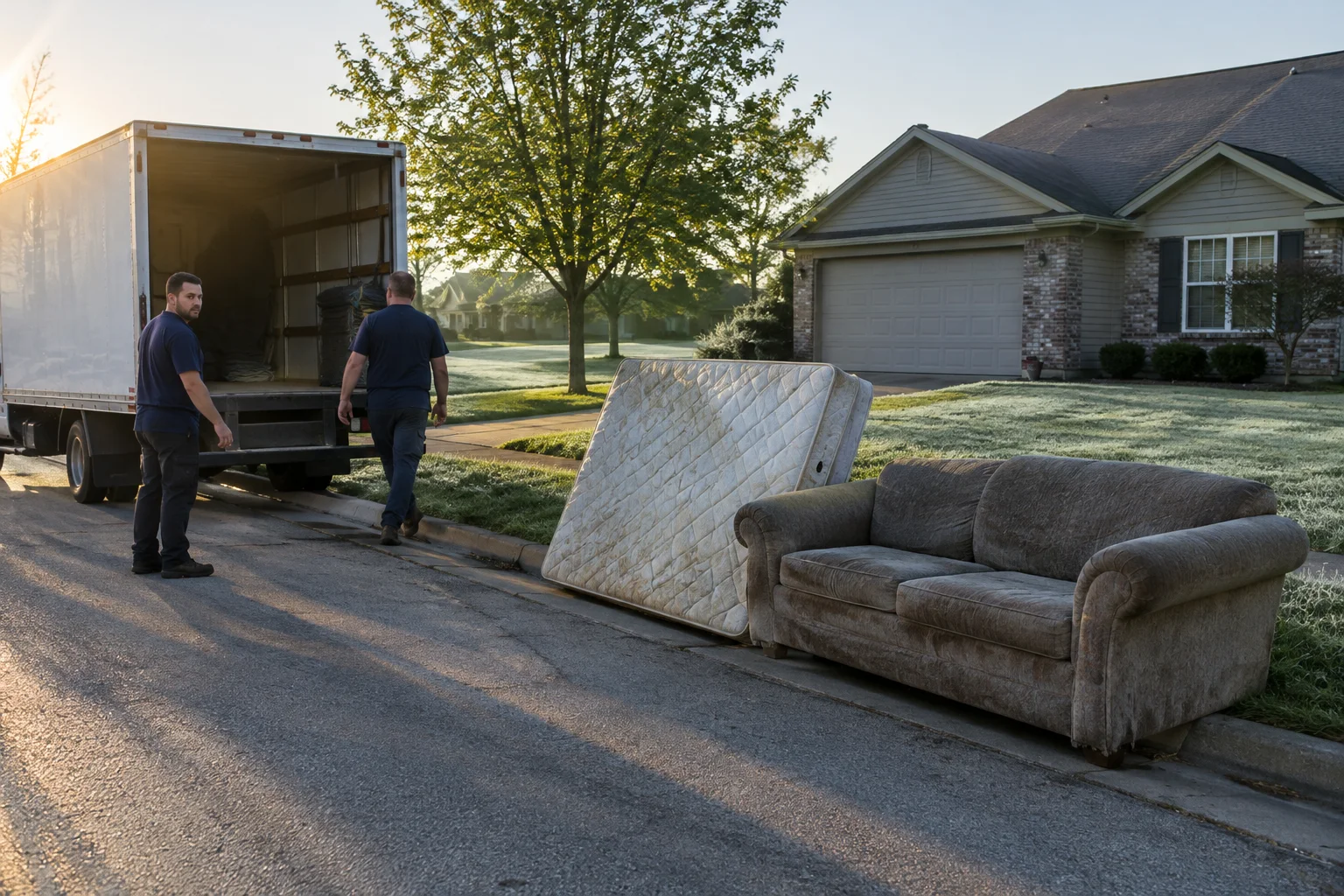
Inside Yorkville city limits, much of a downsizing pile can leave through services the city already contracts with Groot, its refuse hauler. Plan the sorting around these options so the let-go pile is gone before moving day.
- Weekly: one large household item under 50 lbs goes out with regular collection without a prepaid sticker. Extra bags or containers outside the cart need prepaid stickers, which the city says are sold at two local stores.
- Twice a year: Groot runs one spring and one fall white goods and bulk-item pickup. Bulk items include bookcases, mattresses and box springs, sofas, tables and chairs, and broken-down pianos or organs. Items must be at the curb by 6 a.m. on your garbage day, and there is only one pass.
- Carpet: cut into 4-foot sections under 50 lbs each and bound; up to four rolls count as one bulk item.
- Electronics: the city lists 17 types, including TVs, computers and game consoles, that can’t go in the trash because Illinois law keeps them out of landfills. Call Groot at 630-892-9294 to schedule a free curbside pickup; TVs over 50 lbs are excluded, and very large items may carry a charge.
If a spring or fall bulk pickup falls a few weeks before the move, hold the leftover mattresses and sofas for it. Missed-collection and scheduling questions go to Groot at yorkville@groot.com or 630-892-9294, per the city’s refuse page.
Families leaving Oswego, Montgomery or Plano should check their own village or city hauler’s rules, because these pickups cover addresses within Yorkville city limits only.
Planning a move in Yorkville?
Book a free, no-obligation estimate with Amenity’s office. One household per truck, licensed since 1986.
Packing only the keep pile
Packing a downsizing move means packing selectively: only what is going to the new home or to storage, with everything else clearly marked to stay. Partial packing suits families who want to do the personal rooms themselves; full packing suits a household where nobody has the time or strength for it.
Amenity’s packers are specialists separate from the moving crew. They bring specially sized cartons for mirrors, wardrobe clothing and mattresses, and every container is labeled with its contents and the room it goes to, which matters when the new home has four rooms instead of nine. Heirlooms, glass and art can be custom crated through fragile item crating, and Amenity offers optional liability valuation coverage on items it packs.
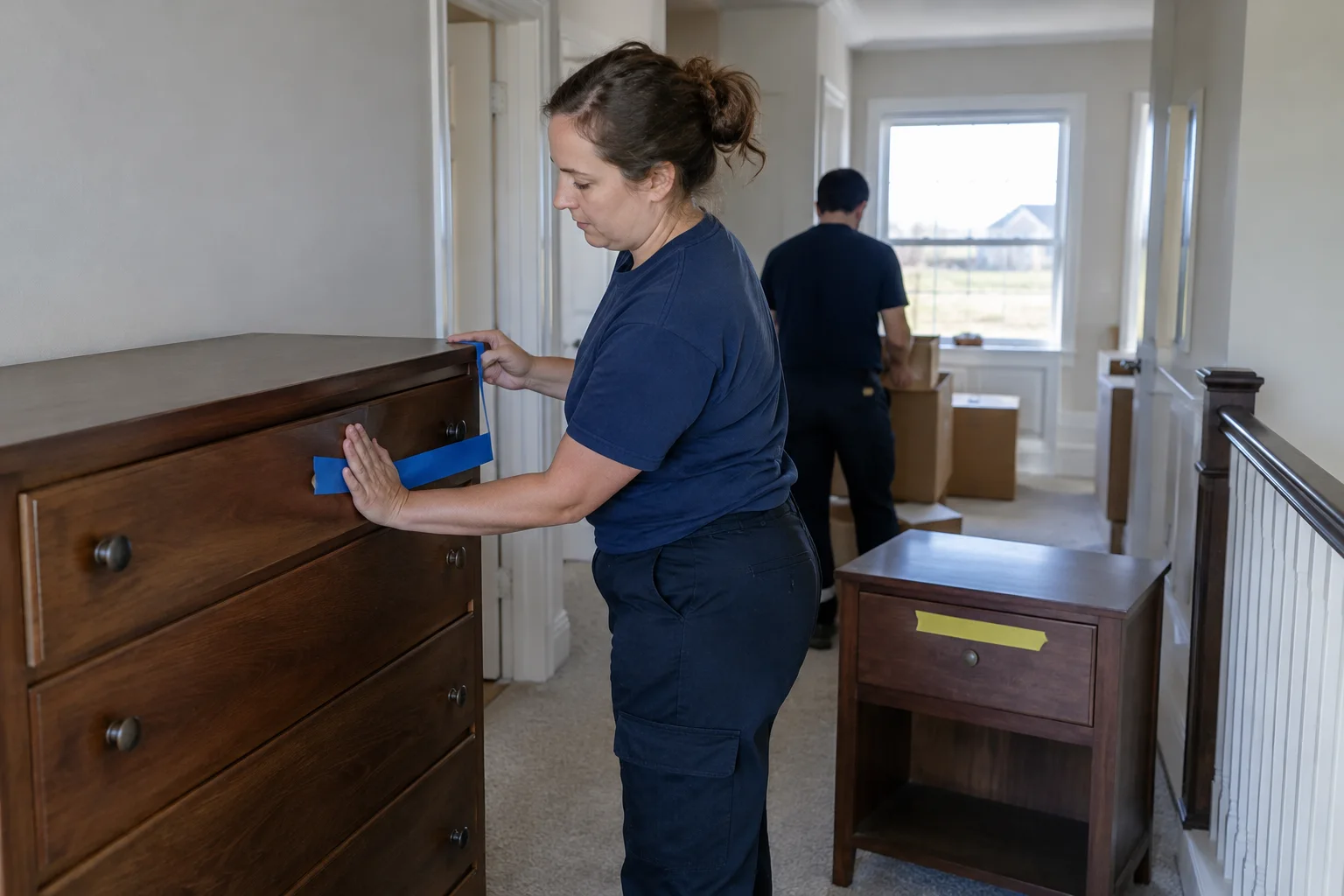
- Pick one color per destinationUse colored tape or sticky notes: one color for the new home, one for storage, one for each family member, and one for items that stay or leave.
- Tag furniture where the crew will lookPut the tag on the top or front face of each piece, not the back against the wall.
- Move the leave pile out of the wayGather what isn’t going into one room or the garage, so nothing is packed by mistake.
- Walk the house with the crew leadBefore the first carton is built, confirm the color code and any pieces with special handling.
Storage for the undecided pile
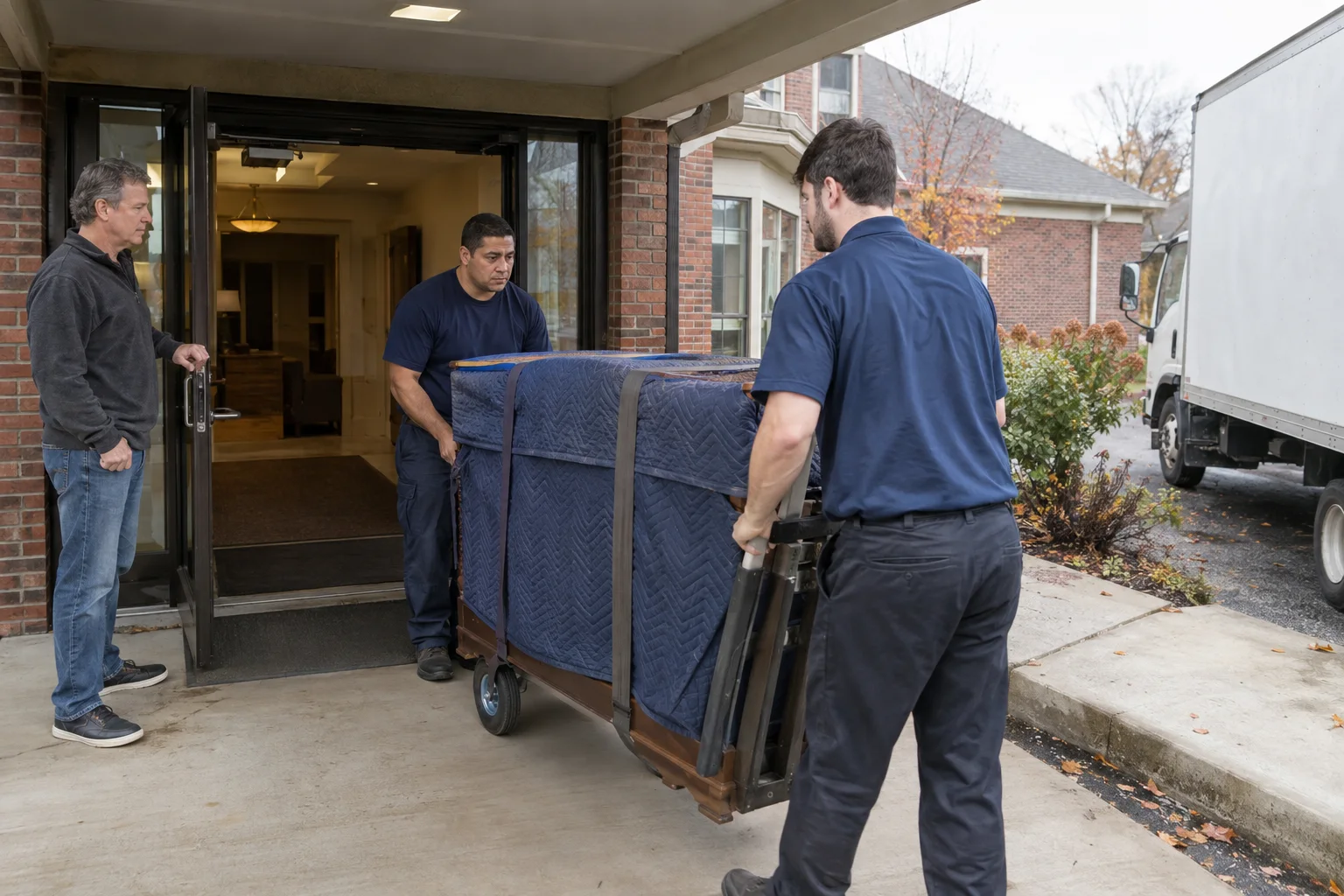
Storage gives the family time to decide on the pieces nobody can let go of yet, without crowding the new home. Amenity keeps stored goods in its climate-controlled Plainfield warehouse, with furniture padded, wrapped and sealed in wooden crates and every item listed in an inventory database.
For a downsizer that solves two problems: the grandchild who wants the dining set next year, and the closing that happens before the condo is ready. Storage can run from a single day to several years; see short-term storage for the in-between weeks. Only Amenity personnel enter the warehouse, so call the office when you want something brought back out.
What changes the time and cost of a downsizing move
Hours drive the cost of most local downsizing moves, because the ICC’s consumer guide notes that moves within Kendall and the surrounding counties, or under 50 miles, may be billed by workers and hours. Anything that adds hours adds cost, and sorting before packing day is the part a family controls.
| Factor | Why it adds or saves time |
|---|---|
| Unsorted rooms on packing day | Packers wait while the family decides; sorting beforehand saves hours |
| More than one destination | Each extra stop, such as a relative’s home or the warehouse, adds driving and unloading |
| Stairs and long carries | A finished basement, a walk-up or a long hallway slows every trip |
| Elevator rules at the new building | Reserved windows and shared elevators set the pace of unloading |
| Heavy specialty items | Pianos, safes and hot tubs need extra crew and equipment |
| Packing level | Full packing takes more crew hours than partial packing, and less of yours |
Amenity doesn’t publish rates; the free in-home estimate puts the crew size and expected hours in writing. For the general mechanics, read how moving costs work in Yorkville, and use the downsizing checklist for seniors and families to pace the sorting.
More senior moving & downsizing services
Back to Senior Moving & Downsizing in Yorkville · all moving services
Available across the Yorkville area
Frequently asked questions
What should go first when you downsize?
Start with anything broken, expired or unsafe: cracked dishes, dried-out paint, worn bedding, old chemicals and electronics that no longer work. Then clear duplicates and the things kept for years just in case. Electronics and hazardous products need special handling in Illinois rather than the trash, so check the city’s e-waste pickup and what to get rid of before you move.
What not to keep when moving to a smaller home?
Don’t keep furniture that needs a room the new home doesn’t have, sets sized for holiday crowds, tools for a yard you’re leaving, or paperwork with no legal or family purpose. Measure the new rooms first, then let the floor plan decide. Pieces family members want can go to them now or wait in storage.
Why do downsizers often leave the hot tub behind?
Owners give different reasons, from upkeep to rarely using it, but for a downsizer the deciding factor is usually space: if the next home has no slab, patio or electrical service for a spa, it can’t come along. Amenity offers hot tub removal and disposal, and the owner has the tub drained and disconnected from power first.
Do you haul away donations or furniture we don't want?
No. Amenity Moving & Storage moves, packs and stores, but it doesn’t offer junk removal, donation hauling, estate sales or clean-outs. For Yorkville addresses, the city’s weekly bulk allowance, twice-yearly bulk pickups and scheduled e-waste collection handle much of what’s left, and charities or buyers can collect the rest.
Should we sort before or after the in-home estimate?
Start before if you can, but don’t wait to book. A half-sorted house still gives the estimator a fair picture. Mark the obvious keep and leave pieces, mention anything headed to family or storage, and say which rooms are still being sorted so the written estimate reflects it.
Can part of the household go to a relative's house?
Tell the estimator about every destination at the start. A second stop, such as a son’s home in another town, adds driving and unloading time to an hourly move, so it belongs in the written estimate. If the relative isn’t ready yet, those pieces can go into Amenity’s warehouse and be delivered later.
How long does a downsizing move take?
It depends on how much is moving, how much is already sorted, the packing level, stairs and elevators, and how many stops there are. Amenity doesn’t quote general timeframes; after the free in-home walk-through, the written estimate shows the crew size and expected hours for your home.
Sources
- Refuse Collection — United City of Yorkville
- White Goods/Bulk Items — United City of Yorkville
- E-Waste Recycling — United City of Yorkville
- Household Hazardous Wastes — Illinois Environmental Protection Agency
- FAQs — National Association of Senior & Specialty Move Managers
Who handles your move
Yorkville Movers is operated by Amenity Moving & Storage Inc., 10028 Mandel St, Plainfield, IL 60585 — a family-run Illinois mover since 1986 whose crews dispatch to Yorkville and Kendall County from its Plainfield warehouse. Illinois household goods license ILCC 73744 MC-C. Interstate moves are transported under the authority of Wheaton Van Lines, Inc. (USDOT 70719, MC-87113), for which Amenity is an authorized agent. See licenses & disclosures.
Last reviewed November 11, 2026 by the Yorkville Movers team against Amenity Moving & Storage’s published service details and the public sources listed above.
Planning a move in Yorkville?
Book a free, no-obligation estimate with Amenity’s office. One household per truck, licensed since 1986.